

Islamic Feminism
Islamic Feminism
Paperback
Couldn't load pickup availability
Join our rewards scheme and earn reward points on this purchase!
Earn points on this!
Sign in or Sign up!- Release Date: 30/04/2026
- Barcode: 9781783606337
- Genre: Philosophy & Spirituality
- Subgenre: Gender Sex & Relationships

Islamic Feminism
Couldn't load pickup availability
Collapsible content
DESCRIPTION
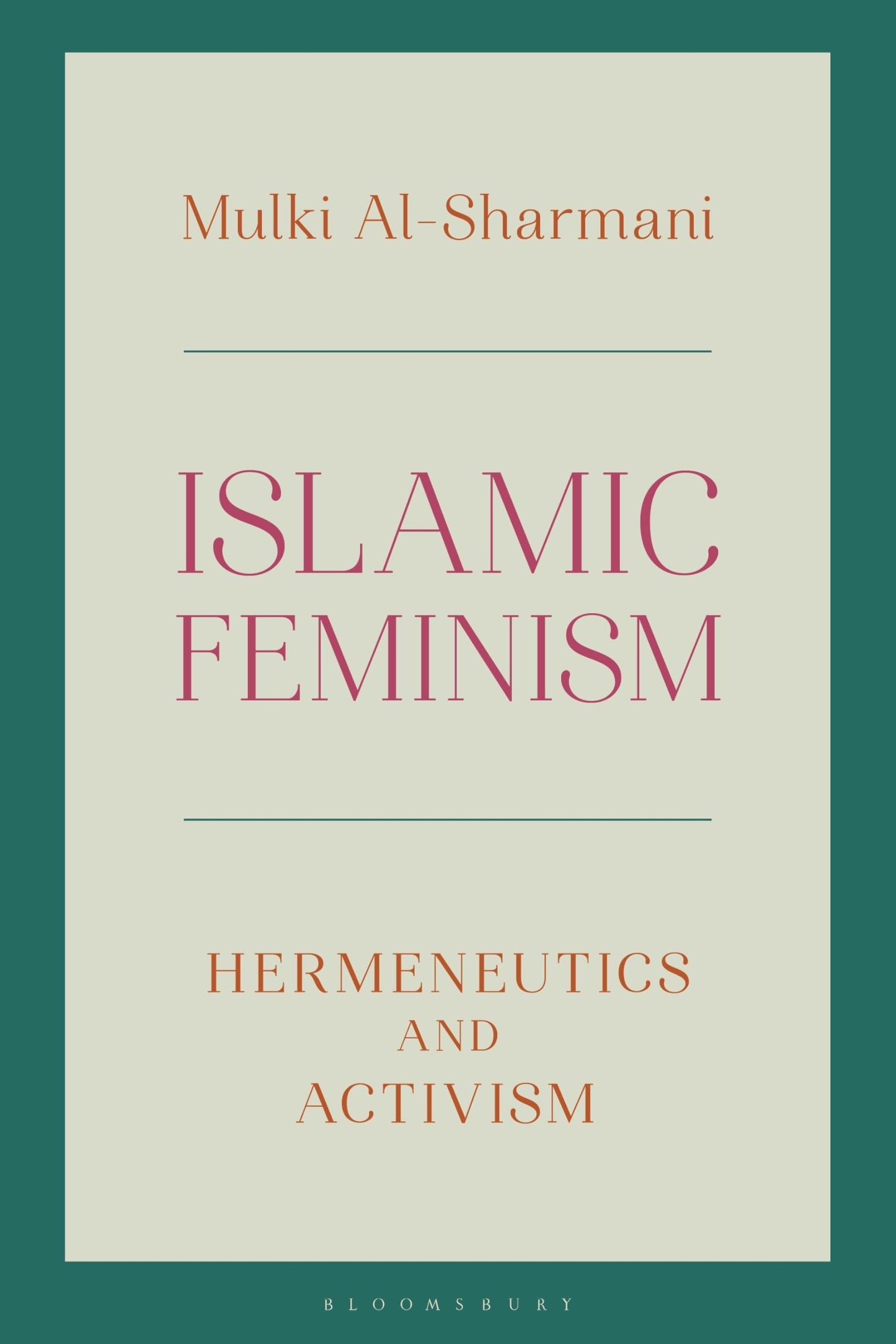
An incisive study of Islamic feminist scholarship and of the role of ordinary Muslim women in shaping Islamic attitudes, which upends many of our preconceptions about the religion.
Mulki Al-Sharmani examines the goals, approaches and methodologies which key scholars have adopted in their efforts at crafting an Islamic feminist discourse. The position of women in Islam remains deeply contentious. While conservative elements both within Islam and among its Western critics continue to claim that Islamic law and values are fundamentally incompatible with modern notions of gender equality, since the 1980s there has been a growing body of scholarship which seeks to make the case for feminism and gender justice within a distinctly Islamic paradigm. Encompassing scholars from both the Islamic world and the Muslim diaspora, ranging from the pioneering scholar activist Amina Wadud to Egypt's Omaima Abou Bakr, the book also looks at how these scholars have translated their work into meaningful political action through groups such as the global Musawah movement and the Egyptian Women and Memory Forum. Crucially, Al-Sharmani also shows that Islamic feminism is a phenomenon which extends far beyond academia. Drawing on the author's own extensive research and interviews with women in Egypt, the UK, Malaysia, Finland and elsewhere, the book explores how ordinary Muslim women in both the West and the Islamic world are increasingly asserting their autonomy and challenging patriarchal interpretations of their religion, as well as exploring the linkages between Islamic feminist scholarship and the realities of these women's lived experiences. In the process, Islamic Feminism not only uncovers new directions for Islamic feminist scholarship, but upends many of our preconceptions about Islam and the role of women within it.
DELIVERY & RETURNS
UK Delivery:
- Free delivery on all orders of £10 or more.
- £1.49 delivery fee on orders below £10.
- UK orders are shipped via Royal Mail 2nd Class.
International Delivery:
- Flat rate delivery charges vary by country.
Dispatch and Delivery Times:
- All orders are shipped from our warehouse in Northampton, UK as soon as stock is available.
- UK mainland orders typically arrive within 3-7 working days via Royal Mail 2nd Class.
- International estimated delivery times:
- Europe & Channel Islands: 7 to 10 working days
- USA: 7 to 15 working days
- Rest of the World: 9 to 30 working days
View our full delivery infomation here.
-
OVER
2 MILLION PRODUCTS
-
60 MILLION CUSTOMERS
ACROSS 190 COUNTRIES
You might also like
Loading recommendations...