

The New Economics of Income Distribution
The New Economics of Income Distribution
Book
Couldn't load pickup availability
Join our rewards scheme and earn reward points on this purchase!
Earn points on this!
Sign in or Sign up!- Release Date: 26/06/2015
- Barcode: 9781783472369
- Genre: Business & Finance
- Subgenre: Society & Culture

The New Economics of Income Distribution
Couldn't load pickup availability
Collapsible content
DESCRIPTION
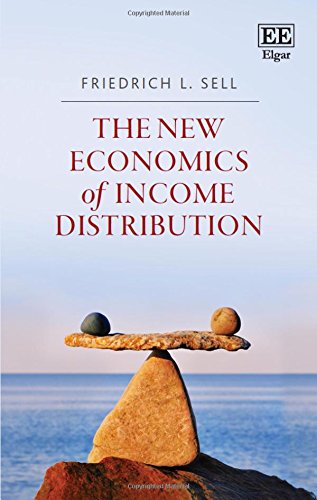
Introducing Equilibrium Concepts into a Contested Field. With the increased interest in the role of inequality in modern economies, this timely and original book explores income distribution as an equilibrium phenomenon. The study of income inequality is of fundamental importance to economics, although it has been largely overlooked since the 1980s. This book provides a long-overdue review of the study of income inequality and of its importance both to the economic welfare of modern advanced economies and their social cohesion. This book both widens the traditional scope of the subject to include, for example, the long-run effects of globalisation on income inequality, but also integrates the various models models to provide a coherent and consistent analysis of this important issue.' With the increased interest in the role of inequality in modern economies, this timely and original book explores income distribution as an equilibrium phenomenon. Though globalization tends to destroy earlier equilibria within industrialized and developing countries, new equilibria are bound to emerge. The book aims at a better understanding of the forces that create these new equilibria in income distribution and examines the concept at three distinct levels: market equilibrium, bargaining equilibrium and political economy equilibrium. In particular, the author addresses the question of how the main factor markets of labour and capital are related to income distribution. Sell's theoretical and empirical analysis investigates global income quotas, the aggregate distribution of income between labour and capital, and between labour income earners and profit income earners. New models are used to explain the dynamics of income distribution during business cycles and as a companion to long-term economic growth. A main focus of the monograph is on the ways in which globalization affects income distribution via trade flows, capital flows and labor mobility. Throughout, income distribution is regarded as a result of the struggle between different social preferences such as inequity aversion and equity aversion. This erudite and extensive tome will be of value to all economists, scholars and students interested in economic growth and inequality.
- Eric J. Pentecost, Loughborough University, UK
ADDITIONAL DETAILS
DELIVERY & RETURNS
UK Delivery:
- Free delivery on all orders of £10 or more.
- £1.49 delivery fee on orders below £10.
- UK orders are shipped via Royal Mail 2nd Class.
International Delivery:
- Flat rate delivery charges vary by country.
Dispatch and Delivery Times:
- All orders are shipped from our warehouse in Northampton, UK within 48 hours of receipt during working hours.
- UK mainland orders typically arrive within 3-5 working days via Royal Mail 2nd Class.
- International estimated delivery times:
- Europe & Channel Islands: 7 to 10 working days
- USA: 7 to 15 working days
- Rest of the World: 9 to 21 working days
View our full delivery infomation here.
-
OVER
2 MILLION PRODUCTS
-
60 MILLION CUSTOMERS
ACROSS 190 COUNTRIES
You might also like
Loading recommendations...