

The Afterlife of Malcolm X
The Afterlife of Malcolm X
An Outcast Turned Icon's Enduring Impact on America
Hardback
Couldn't load pickup availability
Join our rewards scheme and earn reward points on this purchase!
Earn points on this!
Sign in or Sign up!- Release Date: 19/06/2025
- Barcode: 9781668033296
- Genre: Society & Culture
- Sub-Genre: Social & Ethical Issues
- Imprint: Simon & Schuster
- Publisher: Simon & Schuster
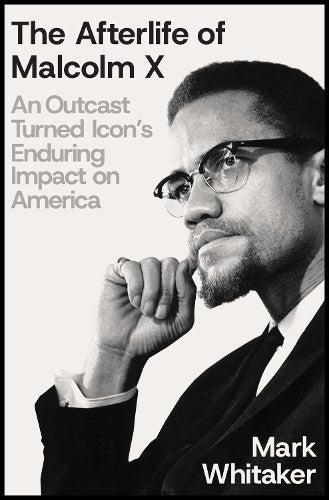

The Afterlife of Malcolm X
Couldn't load pickup availability
Collapsible content
DESCRIPTION
An Outcast Turned Icon's Enduring Impact on America
The Afterlife of Malcolm X is the first major study of the remarkable influence that the iconic black leader has had not in life but in death, in the sixty years since his bloody assassination in the Audubon Ballroom on February 21, 1965.
Published to coincide with the hundredth anniversary of his birth, the first major study of Malcolm X’s influence in the sixty years since his assassination, exploring his enduring impact on culture, politics, and civil rights.
Malcolm X has become as much of an American icon as Abraham Lincoln, John F. Kennedy, or Martin Luther King. But when he was murdered in 1965, he was still seen as a dangerous outsider. White America found him alienating, mainstream African Americans found him divisive, and even his admirers found him bravely radical. Although Ossie Davis famously eulogized Malcolm X as “our own Black shining prince,” he never received the mainstream acceptance toward which he seemed to be striving in his final year. It is more in death than his life that Malcolm’s influence has blossomed and come to leave a deep imprint on the cultural landscape of America.
With impeccable research and original reporting, Mark Whitaker tells the story of Malcolm X’s far-reaching posthumous legacy. It stretches from founders of the Black Power Movement such as Stokely Carmichael and Huey Newton to hip-hop pioneers such as Public Enemy and Tupac Shakur. Leaders of the Black Arts and Free Jazz movements from Amiri Baraka to Maya Angelou, August Wilson, and John Coltrane credited their political awakening to Malcolm, as did some of the most influential athletes of our time, from Muhammad Ali to Kareem Abdul-Jabbar and beyond. Spike’s movie biopic and the Black Lives Matter movement reintroduced Malcolm to subsequent generations. Across the political spectrum, he has been cited as a formative influence by both Barack Obama—who venerated Malcolm’s “unadorned insistence on respect”—and Clarence Thomas, who was drawn to Malcolm’s messages of self-improvement and economic self-help.
In compelling new detail, Whitaker also retraces the long road to exoneration for two men wrongfully convicted of Malcolm’s murder, making The Afterlife of Malcolm X essential reading for anyone interested in true crime, American politics, culture, and history.
DELIVERY & RETURNS
UK Delivery:
- Free delivery on all orders of £10 or more.
- £1.49 delivery fee on orders below £10.
- UK orders are shipped via Royal Mail 2nd Class.
International Delivery:
- Flat rate delivery charges vary by country.
Dispatch and Delivery Times:
- All orders are shipped from our warehouse in Northampton, UK as soon as stock is available.
- UK mainland orders typically arrive within 3-7 working days via Royal Mail 2nd Class.
- International estimated delivery times:
- Europe & Channel Islands: 7 to 10 working days
- USA: 7 to 15 working days
- Rest of the World: 9 to 30 working days
View our full delivery infomation here.
-
OVER
2 MILLION PRODUCTS
-
60 MILLION CUSTOMERS
ACROSS 190 COUNTRIES
You might also like
Loading recommendations...