

Pastiche, Fashion, and Galanterie in Chardin's Genre Subjects
Pastiche, Fashion, and Galanterie in Chardin's Genre Subjects
Looking Smart
Paperback
Couldn't load pickup availability
Join our rewards scheme and earn reward points on this purchase!
Earn points on this!
Sign in or Sign up!- Release Date: 12/12/2013
- Barcode: 9781644530559
- Imprint: University of Delaware Press
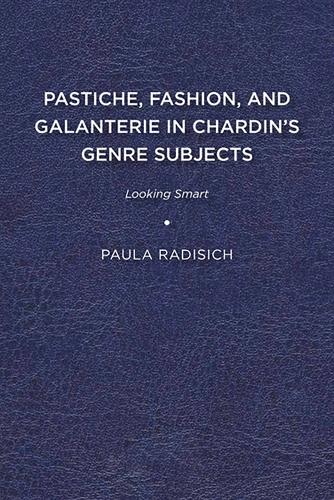

Pastiche, Fashion, and Galanterie in Chardin's Genre Subjects
Couldn't load pickup availability
Collapsible content
DESCRIPTION
Looking Smart
Examines how Chardin's genre subjects were composed and constructed to communicate certain things to the elites of Paris in the 1730s and 1740s. The book argues against the conventional view of Chardin as the transparent imitator of bourgeois life and values so ingrained in art history since the nineteenth century.
Pastiche, Fashion and Galanterie in Chardin's Genre Subjects seeks to understand how Chardin's genre subjects were composed and constructed to communicate certain things to the elites of Paris in the 1730s and 1740s. The book argues against the conventional view of Chardin as the transparent imitator of bourgeois life and values so ingrained in art history since the nineteenth century. Instead, it makes the case that these pictures were crafted to demonstrate the artist's wit (esprit) and taste, traits linked to conventions of seventeenth-century galanterie. Early eighteenth-century Moderns like Jean-Siméon Chardin (1699–1779) embraced an aesthetic grounded upon a notion of beauty that could not be put into words—the je ne sais quoi. Despite its vagueness, this model of beauty was drawn from the present, departed from standards of formal beauty, and could only be known through the critical exercise of taste. Though selecting subjects from the present appears to be a simple matter, it was complicated by the fact that the modernizers expressed themselves through the vehicles of older, established forms. In Chardin's case, he usually adapted the forms of seventeenth-century Dutch and Flemish genre painting in his genre subjects. This gambit required an audience familiar enough with the conventions of Lowlands art to grasp the play involved in a knowing imitation, or pastiche. Chardin's first group of enthusiasts accordingly were collectors who bought works of living French artists as well as Dutch and Flemish masters from the previous century, notably aristocratic connoisseurs like the chevalier Antoine de la Roque and Count Carl-Gustaf Tessin.
Published by University of Delaware Press. Distributed worldwide by Rutgers University Press.
ADDITIONAL DETAILS
DELIVERY & RETURNS
UK Delivery:
- Free delivery on all orders of £10 or more.
- £1.49 delivery fee on orders below £10.
- UK orders are shipped via Royal Mail 2nd Class.
International Delivery:
- Flat rate delivery charges vary by country.
Dispatch and Delivery Times:
- All orders are shipped from our warehouse in Northampton, UK within 48 hours of receipt during working hours.
- UK mainland orders typically arrive within 3-5 working days via Royal Mail 2nd Class.
- International estimated delivery times:
- Europe & Channel Islands: 7 to 10 working days
- USA: 7 to 15 working days
- Rest of the World: 9 to 21 working days
View our full delivery infomation here.
-
OVER
2 MILLION PRODUCTS
-
60 MILLION CUSTOMERS
ACROSS 190 COUNTRIES
You might also like
Loading recommendations...