

A New Science of the Afterlife
A New Science of the Afterlife
Space, Time, and the Consciousness Code
Paperback
Couldn't load pickup availability
Join our rewards scheme and earn reward points on this purchase!
Earn points on this!
Sign in or Sign up!- Release Date: 20/07/2023
- Barcode: 9781644116814
- Genre: Philosophy & Spirituality
- Sub-Genre: Mind Body & Spirit
- Publisher: Inner Traditions Bear and Company
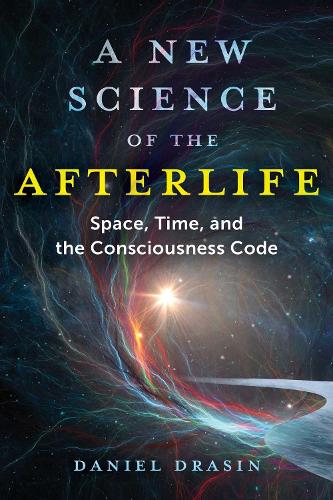

A New Science of the Afterlife
Couldn't load pickup availability
Collapsible content
DESCRIPTION
Space, Time, and the Consciousness Code
Reveals how the continuity of consciousness beyond the physical body can be objectively demonstrated.
Reveals how the continuity of consciousness beyond the physical body can be objectively demonstrated.
Sharing his more than three decades of research into the afterlife and paranormal phenomena, award-winning documentary filmmaker Daniel Drasin shows that the continuity of human consciousness beyond the physical body and after death constitutes a legitimate area of scientific inquiry and that it can be objectively demonstrated.
Drasin begins by revealing how our belief in materialism—through its effects on our social norms, taboos, and even language—has deeply constrained our civilization’s understanding of the nature of space, time, life, death, and consciousness. However, as Drasin explains, our deeply ingrained cultural habits tied to materialism have begun to change. He explores 15 promising post-materialist scientific investigations currently underway, focusing in depth on three examples that offer the most objectively irrefutable evidence for the survival of consciousness, including electronic audio and visual communications from the other side, the ground-breaking five-year Scole Experiment in physical mediumship, and the profoundly evidential reincarnation case of James Leininger.
Looking at how language frames our perceptions and our ways of thinking about life and death, the author presents thought-experiments and simple exercises to help us see through materialist ideology and perceive a broader landscape of reality. He provides a succinct account of the experience of transition to the “next life” and explores what the afterlife is made of, where it’s located, how it works, and what it’s for.
Drasin shows how, by thinking and speaking about death and the survival of consciousness in new ways, we can not only explore their expanses more thoroughly but also facilitate a clearer, more relaxed, comfortable, and rational conversation about what awaits us all sooner or later on the other side of life.
ADDITIONAL DETAILS
DELIVERY & RETURNS
UK Delivery:
- Free delivery on all orders of £10 or more.
- £1.49 delivery fee on orders below £10.
- UK orders are shipped via Royal Mail 2nd Class.
International Delivery:
- Flat rate delivery charges vary by country.
Dispatch and Delivery Times:
- All orders are shipped from our warehouse in Northampton, UK as soon as stock is available.
- UK mainland orders typically arrive within 3-7 working days via Royal Mail 2nd Class.
- International estimated delivery times:
- Europe & Channel Islands: 7 to 10 working days
- USA: 7 to 15 working days
- Rest of the World: 9 to 30 working days
View our full delivery infomation here.
-
OVER
2 MILLION PRODUCTS
-
60 MILLION CUSTOMERS
ACROSS 190 COUNTRIES
You might also like
Loading recommendations...