

Washington State's Round Barns
Washington State's Round Barns
Preserving a Vanishing Rural Heritage
Paperback
Couldn't load pickup availability
Join our rewards scheme and earn reward points on this purchase!
Earn points on this!
Sign in or Sign up!- Release Date: 18/04/2024
- Barcode: 9781638640240
- Genre: Entertainment & The Arts
- Sub-Genre: Architecture & Antiques
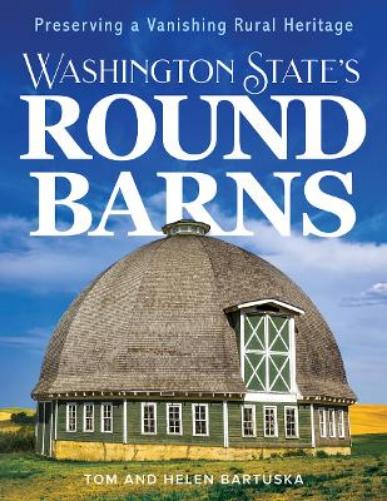

Washington State's Round Barns
Couldn't load pickup availability
Collapsible content
DESCRIPTION
Preserving a Vanishing Rural Heritage In addition, the Bartuskas introduce the hows and whys, as well as the fascinating history and development of round barns across the United States. The structures continue to succumb to economic and technological changes, as well as to fire, disrepair, and the forces of nature. Since the authors started their project, seven of the barns no longer exist, and several of the remaining fourteen are in serious trouble. Hoping to inspire others to help maintain, preserve, and restore these unique cultural icons, they include examples of successful re-use and creative conservation nationwide, along with other significant ways to save additional types of barns, buildings, and rural communities in order to preserve a vanishing rural heritage.
Hoping to inspire others to help maintain, preserve, and restore the unique round barns of Washington State, this book includes examples of successful re-use and creative conservation, along with other significant ways to save additional types of barns, buildings, and rural communities in order to preserve a vanishing rural heritage.
Enchanted by their beauty, complexity, and historical significance, the Bartuskas began researching, visiting, and photographing the region's round barns soon after Tom accepted a teaching position at Washington State University's architecture department in 1963. Focusing on structures over fifty years old, at least two stories, and over fifty feet in diameter, the authors eventually found twenty-one, and made it their mission to create a comprehensive inventory. Since most of the barns were constructed in the early 1900s, the couple explored archives to gather remarkable historic photographs and paperwork. When possible, they also took interior and exterior photographs and talked with owners to tell the story of each one--who built it and when, original and current uses, individual characteristics, construction details, and extra anecdotes they learned along the way. They also revisited several sites to document what changed over time.
DELIVERY & RETURNS
UK Delivery:
- Free delivery on all orders of £10 or more.
- £1.49 delivery fee on orders below £10.
- UK orders are shipped via Royal Mail 2nd Class.
International Delivery:
- Flat rate delivery charges vary by country.
Dispatch and Delivery Times:
- All orders are shipped from our warehouse in Northampton, UK within 48 hours of receipt during working hours.
- UK mainland orders typically arrive within 3-5 working days via Royal Mail 2nd Class.
- International estimated delivery times:
- Europe & Channel Islands: 7 to 10 working days
- USA: 7 to 15 working days
- Rest of the World: 9 to 21 working days
View our full delivery infomation here.
-
OVER
2 MILLION PRODUCTS
-
60 MILLION CUSTOMERS
ACROSS 190 COUNTRIES
You might also like
Loading recommendations...