

Bodies on the Line
Bodies on the Line
Paperback
Couldn't load pickup availability
Join our rewards scheme and earn reward points on this purchase!
Earn points on this!
Sign in or Sign up!- Release Date: 01/12/2014
- Barcode: 9781609383039
- Genre: Literary Criticism
- Imprint Family: University of Iowa Press
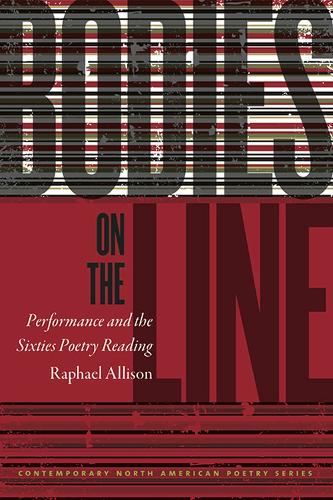

Bodies on the Line
Couldn't load pickup availability
Collapsible content
DESCRIPTION
Performance and the Sixties Poetry Reading
Offers the first sustained study of the poetry reading in its most formative period: the 1960s. Raphael Allison closely examines a vast archive of audio recordings of several key post-war American poets to explore the social and literary context of the sixties poetry reading, which is characterized by contrasting differing styles of performance: the humanist style and the sceptical strain.
Bodies on the Line offers the first sustained study of the poetry reading in its most formative period: the 1960s. Raphael Allison closely examines a vast archive of audio recordings of several key post-war American poets to explore the social and literary context of the sixties poetry reading, which is characterized by contrasting differing styles of performance: the humanist style and the skeptical strain. The humanist style, made mainstream by the Beats and their imitators, is characterized by faith in the power of presence, emotional communion, and affect. The skeptical strain emphasizes openness of interpretation and multivalent meaning, a lack of stability or consistency, and ironic detachment.
By comparing these two dominant styles of reading, Allison argues that attention to sixties poetry readings reveals poets struggling between the kind of immediacy and presence that readings suggested and a private retreat from such performance-based publicity, one centred on the text itself. Recordings of Robert Frost, Charles Olson, Gwendolyn Brooks, Larry Eigner, and William Carlos Williams—all of whom emphasized voice, breath, and spoken language and who were inveterate professional readers in the sixties—expose this struggle in often surprising ways. In deconstructing assertions about the role and importance of the poetry reading during this period, Allison reveals just how dramatic, political, and contentious poetry readings could be. By discussing how to “hear” as well as “read” poetry, Bodies on the Line offers startling new vantage points from which to understand American poetry since the 1960s as both performance and text.
DELIVERY & RETURNS
UK Delivery:
- Free delivery on all orders of £10 or more.
- £1.49 delivery fee on orders below £10.
- UK orders are shipped via Royal Mail 2nd Class.
International Delivery:
- Flat rate delivery charges vary by country.
Dispatch and Delivery Times:
- All orders are shipped from our warehouse in Northampton, UK within 48 hours of receipt during working hours.
- UK mainland orders typically arrive within 3-5 working days via Royal Mail 2nd Class.
- International estimated delivery times:
- Europe & Channel Islands: 7 to 10 working days
- USA: 7 to 15 working days
- Rest of the World: 9 to 21 working days
View our full delivery infomation here.
-
OVER
2 MILLION PRODUCTS
-
60 MILLION CUSTOMERS
ACROSS 190 COUNTRIES
You might also like
Loading recommendations...