

Why Can't We Be More Like Trees?
Why Can't We Be More Like Trees?
The Ancient Masters of Cooperation, Kindness, and Healing
Paperback
Couldn't load pickup availability
Join our rewards scheme and earn reward points on this purchase!
Earn points on this!
Sign in or Sign up!- Release Date: 18/01/2024
- Barcode: 9781591435044
- Genre: Science Nature & Math
- Sub-Genre: Earth Sciences
- Publisher: Inner Traditions Bear and Company
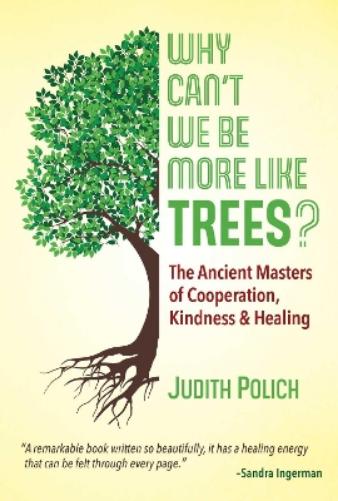

Why Can't We Be More Like Trees?
Couldn't load pickup availability
Collapsible content
DESCRIPTION
The Ancient Masters of Cooperation, Kindness, and Healing
Reveals how we can learn from the intelligent communities of trees and plants.
Reveals how we can learn from the intelligent communities of trees and plants.
Breakthrough research is not only revealing a brilliant green world with amazing attributes like dispersed intelligence but also that humanity, like the tree and plant kingdom, thrives on innate cooperation, sharing, altruism, and community.
Exploring the latest cutting-edge environmental and ecological studies, climate adviser and environmental advocate Judith Polich explains how we can now see how tree and plant communities function, revealing a holistic, interconnected, communal, and seemingly sentient new world. She explains how trees communicate, how they share resources, and other ways in which they express holistic and cooperative behaviours.
Looking at the new scientific understanding of the evolutionary basis of altruism, cooperation, and community—and how these behaviours are genetically coded in our beings—the author examines the attributes we share with trees and other plant communities. She explores the healing powers offered by the plant kingdom, not just as medicines but through shared sentience that can help heal our sense of dissociation and disenchantment. Revealing how to see, think, imagine, and live with holistic eco-centric awareness, the author discusses how the stories we tell ourselves and our spiritual belief systems are becoming greener, including a resurgence of beliefs that originated with plant teachers. She also explores how to overcome our current cognitive biases through greater interaction with plant intelligence.
By viewing the world through a greener lens, not only can we reframe and unravel the deeper causes of the climate crisis, but we can also help co-create a new more conscious world with our plant allies.
ADDITIONAL DETAILS
DELIVERY & RETURNS
UK Delivery:
- Free delivery on all orders of £10 or more.
- £1.49 delivery fee on orders below £10.
- UK orders are shipped via Royal Mail 2nd Class.
International Delivery:
- Flat rate delivery charges vary by country.
Dispatch and Delivery Times:
- All orders are shipped from our warehouse in Northampton, UK as soon as stock is available.
- UK mainland orders typically arrive within 3-7 working days via Royal Mail 2nd Class.
- International estimated delivery times:
- Europe & Channel Islands: 7 to 10 working days
- USA: 7 to 15 working days
- Rest of the World: 9 to 30 working days
View our full delivery infomation here.
-
OVER
2 MILLION PRODUCTS
-
60 MILLION CUSTOMERS
ACROSS 190 COUNTRIES
You might also like
Loading recommendations...