

Obstinate Heroism
Obstinate Heroism
The Confederate Surrenders After Appomattox
Hardback
Couldn't load pickup availability
Join our rewards scheme and earn reward points on this purchase!
Earn points on this!
Sign in or Sign up!- Release Date: 30/04/2020
- Barcode: 9781574417913
- Genre: History
- Sub-Genre: History of the Americas
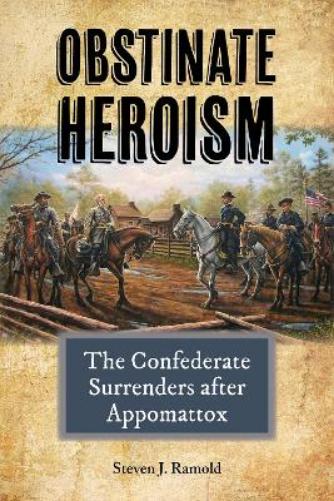

Obstinate Heroism
Couldn't load pickup availability
Collapsible content
DESCRIPTION
The Confederate Surrenders After Appomattox Gen. Joseph Johnston surrendered his army in North Carolina only after contentious negotiations with Gen. William Tecumseh Sherman. Gen. Richard Taylor ended the fighting in Alabama in the face of two massive Union incursions into the state rather than try to consolidate with other Confederate armies. Personal rivalry also played a part in his practical considerations to surrender. Gen. Edmund Kirby Smith had the decision to surrender taken out of his hands - disastrous economic conditions in his Trans-Mississippi Department had eroded morale to such an extent that his soldiers demobilized themselves, leaving Kirby Smith a general without an army. The end of the Confederacy was a messy and complicated affair, a far cry from the tidy closure associated with the events at Appomattox.
Despite popular belief, the Civil War did not end when Robert E. Lee surrendered to Ulysses S. Grant at Appomattox in April 1865. The Confederacy still had tens of thousands of soldiers under arms, in three main field armies and countless smaller commands. The book tells the actual story of the messy and complicated end to the Confederacy.
Despite popular belief, the Civil War did not end when Robert E. Lee surrendered to Ulysses S. Grant at Appomattox, Virginia, in April 1865. The Confederacy still had tens of thousands of soldiers under arms, in three main field armies and countless smaller commands scattered throughout the South. Although pressed by Union forces at varying degrees, all of the remaining Confederate armies were capable of continuing the war if they chose to do so. But they did not, even when their political leaders ordered them to continue the fight. Convinced that most civilians no longer wanted to continue the war, the senior Confederate military leadership, over the course of several weeks, surrendered their armies under different circumstances.
DELIVERY & RETURNS
UK Delivery:
- Free delivery on all orders of £10 or more.
- £1.49 delivery fee on orders below £10.
- UK orders are shipped via Royal Mail 2nd Class.
International Delivery:
- Flat rate delivery charges vary by country.
Dispatch and Delivery Times:
- All orders are shipped from our warehouse in Northampton, UK within 48 hours of receipt during working hours.
- UK mainland orders typically arrive within 3-5 working days via Royal Mail 2nd Class.
- International estimated delivery times:
- Europe & Channel Islands: 7 to 10 working days
- USA: 7 to 15 working days
- Rest of the World: 9 to 21 working days
View our full delivery infomation here.
-
OVER
2 MILLION PRODUCTS
-
60 MILLION CUSTOMERS
ACROSS 190 COUNTRIES
You might also like
Loading recommendations...