

Teaching Mathematics in the Visible Learning Classroom, Grades K-2
Teaching Mathematics in the Visible Learning Classroom, Grades K-2
Paperback
Couldn't load pickup availability
Join our rewards scheme and earn reward points on this purchase!
Earn points on this!
Sign in or Sign up!- Release Date: 09/04/2019
- Barcode: 9781544333298
- Genre: Society & Culture
- Subgenre: Children's Learning & Education
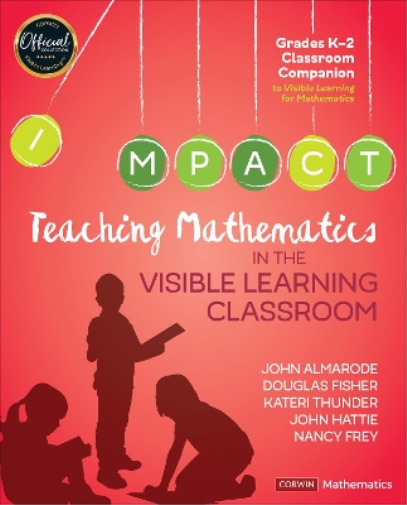

Teaching Mathematics in the Visible Learning Classroom, Grades K-2
Couldn't load pickup availability
Collapsible content
DESCRIPTION
Select the right task, at the right time, for the right phase of learning. How can we best help K-2 students to become assessment-capable visible learners in mathematics? This book answers that question by showing Visible Learning strategies in action in high-impact mathematics instruction. Select the right task, at the right time, for the right phase of learning Young students come to elementary classrooms with different background knowledge, levels of readiness, and learning needs. What works best to help K–2 students develop the tools to become visible learners in mathematics? What works best for K-=–2 mathematics learning at the surface, deep, and transfer levels? In this sequel to the megawatt bestseller Visible Learning for Mathematics, John Almarode, Douglas Fisher, Kateri Thunder, John Hattie, and Nancy Frey help you answer those questions by showing how Visible Learning strategies look in action in K–2 mathematics classrooms. Walk in the shoes of teachers as they mix and match the strategies, tasks, and assessments seminal to making conceptual understanding, procedural knowledge, and the application of mathematical concepts and thinking skills visible to young students as well as to you. It’s not only what works, but when. Exemplary lessons, video clips, and online resources help you leverage the most effective teaching practices at the most effective time to meet the surface, deep, and transfer learning needs of every K–2 student.
.
Using grade-leveled examples and a decision-making matrix, you’ll learn to
DELIVERY & RETURNS
UK Delivery:
- Free delivery on all orders of £10 or more.
- £1.49 delivery fee on orders below £10.
- UK orders are shipped via Royal Mail 2nd Class.
International Delivery:
- Flat rate delivery charges vary by country.
Dispatch and Delivery Times:
- All orders are shipped from our warehouse in Northampton, UK within 48 hours of receipt during working hours.
- UK mainland orders typically arrive within 3-5 working days via Royal Mail 2nd Class.
- International estimated delivery times:
- Europe & Channel Islands: 7 to 10 working days
- USA: 7 to 15 working days
- Rest of the World: 9 to 21 working days
View our full delivery infomation here.
-
OVER
2 MILLION PRODUCTS
-
60 MILLION CUSTOMERS
ACROSS 190 COUNTRIES
You might also like
Loading recommendations...