

Nicaea and the Future of Christianity
Nicaea and the Future of Christianity
Hardback
Couldn't load pickup availability
Join our rewards scheme and earn reward points on this purchase!
Earn points on this!
Sign in or Sign up!- Release Date: 01/07/2025
- Barcode: 9781531510169
- Imprint: Fordham University Press
- Publisher: Fordham University Press
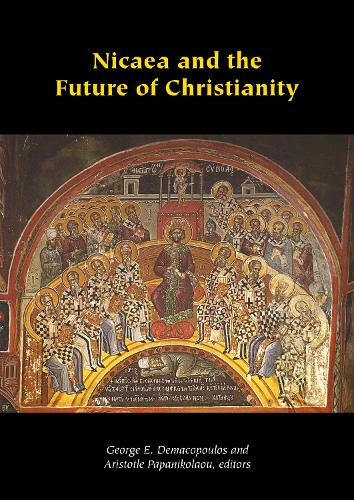

Nicaea and the Future of Christianity
Couldn't load pickup availability
Collapsible content
DESCRIPTION
Commemorating the 1700th anniversary of the Council of Nicaea, this volume offers an original examination of the enduring impact of the single most famous gathering of Christians since the apostolic age. Commemorating the 1700th anniversary of the Council of Nicaea, this volume offers an original examination of the enduring impact of the single most famous gathering of Christians since the apostolic age
Despite the longstanding historical and theological study of the Council of Nicaea, several central questions remain. Was Nicaea a theological event or a political one? What does it mean if it was both? Was Constantine's intervention without precedent, or was he simply continuing a long-standing role of a Roman emperor who was responsible for leading a religious cult (albeit now for a different faith tradition)? And what about the actual theological debates of Nicaea and our ability to understand them? Scholars might never exhaust this avenue of inquiry, despite the numerous studies in recent decades.
For many scholars and Christian activists today, the significance of Nicaea centers around the idea of conciliarity and what this has meant, both historically and theologically, for the Christian community. Why and how did Nicaea become foundational for thinking that the church operates in a conciliar manner? How did that work historically in different parts of the Christian world? And how should it work today?
Nicaea and the Future of Christianity offers a fresh, globally-diverse, ecumenically-minded approach to these questions with an impressive collection of both senior and junior scholars, reflecting a diversity of views within the Orthodox, Catholic, and Protestant traditions. The great benefit of this wide-ranging approach lies precisely in its ability to see the many ways in which Nicaea continues to speak to the future of Christianity.
ADDITIONAL DETAILS
DELIVERY & RETURNS
UK Delivery:
- Free delivery on all orders of £10 or more.
- £1.49 delivery fee on orders below £10.
- UK orders are shipped via Royal Mail 2nd Class.
International Delivery:
- Flat rate delivery charges vary by country.
Dispatch and Delivery Times:
- All orders are shipped from our warehouse in Northampton, UK as soon as stock is available.
- UK mainland orders typically arrive within 3-7 working days via Royal Mail 2nd Class.
- International estimated delivery times:
- Europe & Channel Islands: 7 to 10 working days
- USA: 7 to 15 working days
- Rest of the World: 9 to 30 working days
View our full delivery infomation here.
-
OVER
2 MILLION PRODUCTS
-
60 MILLION CUSTOMERS
ACROSS 190 COUNTRIES
You might also like
Loading recommendations...