

Keeping the Faith
Keeping the Faith
A History of Northern Soul
Paperback
Couldn't load pickup availability
Join our rewards scheme and earn reward points on this purchase!
Earn points on this!
Sign in or Sign up!- Release Date: 19/10/2021
- Barcode: 9781526160416
- Genre: Entertainment & The Arts
- Sub-Genre: Music Theory & Performance
- Imprint: Manchester University Press
- Publisher: Manchester University Press
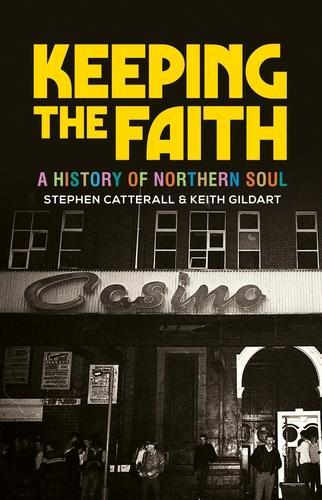

Keeping the Faith
Couldn't load pickup availability
Collapsible content
DESCRIPTION
A History of Northern Soul In the 1970s, Northern Soul held a pivotal position in British youth culture. Originating in the English North and Midlands in the late-1960s, by the mid-1970s it was attracting thousands of enthusiasts across the country. This book is a social history of Northern Soul, examining the origins and development of this music scene, its clubs, publications and practices.
This book examines the development of northern soul, its clubs, publications, and practices by locating it in the shifting economic and social context of the English midlands and north in the 1970s. Using fanzines, diaries, letters, and oral testimony it presents a vivid insight into the scene.
Northern Soul emerged in a period when working class communities were beginning to be transformed by deindustrialisation and the rise of new political movements around the politics of race, gender and locality. Locating Northern Soul in these shifting economic and social contexts of the English North and Midlands in the 1970s, the authors argue that people kept the faith not just with music, but with a culture that was connected to wider aspects of work, home, relationships and social identities.
Drawing on an expansive range of sources, including oral histories, magazines and fanzines, diaries and letters, this book offers a detailed and empathetic reading of a working class culture that was created and consumed by thousands of young people in the 1970s. The authors highlight the complex ways in which class, race and gender identities acted as forces for both unity and fragmentation on the dancefloors of iconic clubs such as the Twisted Wheel in Manchester, Blackpool Mecca, the Torch in Stoke-on-Trent, the Catacombs in Wolverhampton and the Casino in Wigan.
Marking a significant contribution to the historiography of youth culture, this book is essential reading for those interested in popular music and everyday life in postwar Britain.
DELIVERY & RETURNS
UK Delivery:
- Free delivery on all orders of £10 or more.
- £1.49 delivery fee on orders below £10.
- UK orders are shipped via Royal Mail 2nd Class.
International Delivery:
- Flat rate delivery charges vary by country.
Dispatch and Delivery Times:
- All orders are shipped from our warehouse in Northampton, UK as soon as stock is available.
- UK mainland orders typically arrive within 3-7 working days via Royal Mail 2nd Class.
- International estimated delivery times:
- Europe & Channel Islands: 7 to 10 working days
- USA: 7 to 15 working days
- Rest of the World: 9 to 30 working days
View our full delivery infomation here.
-
OVER
2 MILLION PRODUCTS
-
60 MILLION CUSTOMERS
ACROSS 190 COUNTRIES
You might also like
Loading recommendations...