

Belonging Without Othering
Belonging Without Othering
How We Save Ourselves and the World
Hardback
Couldn't load pickup availability
Join our rewards scheme and earn reward points on this purchase!
Earn points on this!
Sign in or Sign up!- Release Date: 23/04/2024
- Barcode: 9781503638846
- Imprint: Stanford University Press
- Publisher: Stanford University Press
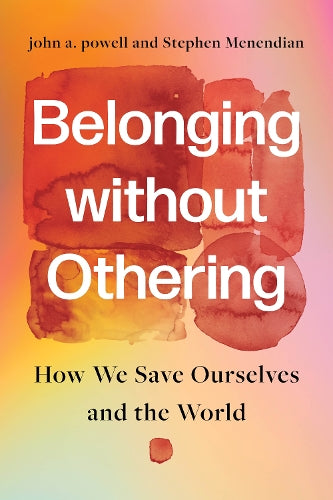

Belonging Without Othering
Couldn't load pickup availability
Collapsible content
DESCRIPTION
How We Save Ourselves and the World The root of all inequality is the process of othering – and its solution is the practice of belonging We all yearn for connection and community, but we live in a time when calls for further division along the well-wrought lines of religion, race, ethnicity, caste, and sexuality are pervasive. This ubiquitous yet elusive problem feeds on fears – created, inherited – of the "other." While the much-touted diversity, equity, and inclusion initiatives are undeniably failing, and activists narrowly focus on specific and sometimes conflicting communities, Belonging without Othering prescribes a new approach that encourages us to turn toward one another in unprecedented and radical ways. The pressures that separate us have a common root: our tendency to cast people and groups in irreconcilable terms – or the process of "othering." This book gives vital language to this universal problem, unveiling its machinery at work across time and around the world. To subvert it, john a. powell and Stephen Menendian make a powerful and sweeping case for adopting a paradigm of belonging that does not require the creation of an "other." This new paradigm hinges on transitioning from narrow to expansive identities – even if that means challenging seemingly benevolent forms of community-building based on othering. As the threat of authoritarianism grows across the globe, this book makes the case that belonging without othering is the necessary, but not the inevitable, next step in our long journey toward creating truly equitable and thriving societies. The authors argue that we must build institutions, cultivate practices, and orient ourselves toward a shared future, not only to heal ourselves, but perhaps to save our planet as well. Brimming with clear guidance, sparkling insights, and specific examples and practices, Belonging without Othering is a future-oriented exploration that ushers us in a more hopeful direction.
DELIVERY & RETURNS
UK Delivery:
- Free delivery on all orders of £10 or more.
- £1.49 delivery fee on orders below £10.
- UK orders are shipped via Royal Mail 2nd Class.
International Delivery:
- Flat rate delivery charges vary by country.
Dispatch and Delivery Times:
- All orders are shipped from our warehouse in Northampton, UK as soon as stock is available.
- UK mainland orders typically arrive within 3-7 working days via Royal Mail 2nd Class.
- International estimated delivery times:
- Europe & Channel Islands: 7 to 10 working days
- USA: 7 to 15 working days
- Rest of the World: 9 to 30 working days
View our full delivery infomation here.
-
OVER
2 MILLION PRODUCTS
-
60 MILLION CUSTOMERS
ACROSS 190 COUNTRIES
You might also like
Loading recommendations...