

Shadow Negotiators: How UN Organizations Shape the Rules of World Trade for Food Security (Emerging Frontiers in the Global Economy
Shadow Negotiators: How UN Organizations Shape the Rules of World Trade for Food Security (Emerging Frontiers in the Global Economy
Hardback
Couldn't load pickup availability
Join our rewards scheme and earn reward points on this purchase!
Earn points on this!
Sign in or Sign up!- Release Date: 07/02/2023
- Barcode: 9781503633520
- Edition: 1st
- Genre: Business & Finance
- Imprint Family: Stanford University Press
- Publisher: Stanford University Press
- Subgenre: Science Nature & Math
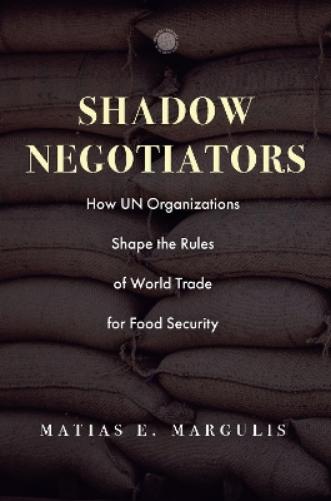

Shadow Negotiators: How UN Organizations Shape the Rules of World Trade for Food Security (Emerging Frontiers in the Global Economy
1st
Couldn't load pickup availability
Collapsible content
DESCRIPTION
How UN Organizations Shape the Rules of World Trade for Food Security Shadow Negotiators is the first book to demonstrate that United Nations (UN) organizations have intervened to influence the discourse, agenda, and outcomes of international trade lawmaking at the World Trade Organization (WTO). While UN organizations lack a seat at the bargaining table at the WTO, Matias E. Margulis argues that these organizations have acted as "shadow negotiators" engaged in political actions intended to alter the trajectory and results of multilateral trade negotiations. He draws on analysis of one of the most contested issues in global trade politics, agricultural trade liberalization, to demonstrate interventions by four different UN organizations—the Food and Agriculture Organization (FAO), the World Food Programme (WFP), the Office of the High Commissioner for Human Rights (OHCHR), and the Special Rapporteur on the Right to Food (SRRTF). By identifying several novel intervention strategies used by UN actors to shape the rules of global trade, this book shows that UN organizations chose to intervene in trade lawmaking not out of competition with the WTO or ideological resistance to trade liberalization, but out of concerns that specific trade rules could have negative consequences for world food security—an outcome these organizations viewed as undermining their social purpose to reduce world hunger and protect the human right to food.
ADDITIONAL DETAILS
DELIVERY & RETURNS
UK Delivery:
- Free delivery on all orders of £10 or more.
- £1.49 delivery fee on orders below £10.
- UK orders are shipped via Royal Mail 2nd Class.
International Delivery:
- Flat rate delivery charges vary by country.
Dispatch and Delivery Times:
- All orders are shipped from our warehouse in Northampton, UK within 48 hours of receipt during working hours.
- UK mainland orders typically arrive within 3-5 working days via Royal Mail 2nd Class.
- International estimated delivery times:
- Europe & Channel Islands: 7 to 10 working days
- USA: 7 to 15 working days
- Rest of the World: 9 to 21 working days
View our full delivery infomation here.
-
OVER
2 MILLION PRODUCTS
-
60 MILLION CUSTOMERS
ACROSS 190 COUNTRIES
You might also like
Loading recommendations...