

The Burden-Sharing Dilemma
The Burden-Sharing Dilemma
Coercive Diplomacy in US Alliance Politics
Hardback
Couldn't load pickup availability
Join our rewards scheme and earn reward points on this purchase!
Earn points on this!
Sign in or Sign up!- Release Date: 15/11/2023
- Barcode: 9781501772474
- Genre: Society & Culture
- Sub-Genre: Politics & Government
- Imprint: Cornell University Press
- Publisher: Cornell University Press
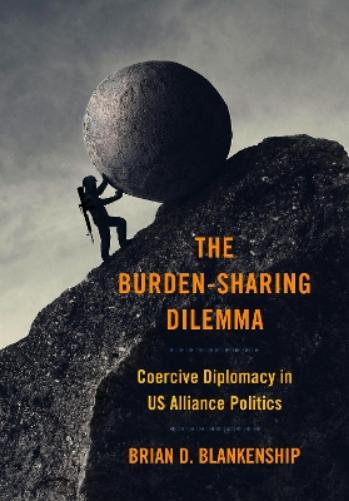

The Burden-Sharing Dilemma
Couldn't load pickup availability
Collapsible content
DESCRIPTION
Coercive Diplomacy in US Alliance Politics The Burden-Sharing Dilemma examines the conditions under which the United States is willing and able to pressure its allies to assume more responsibility for their own defense. The United States has a mixed track record of encouraging allied burden-sharing—while it has succeeded or failed in some cases, it has declined to do so at all in others. This variation, Brian D. Blankenship argues, is because the United States tailors its burden-sharing pressure in accordance with two competing priorities: conserving its own resources and preserving influence in its alliances. Although burden-sharing enables great power patrons like the United States to lower alliance costs, it also empowers allies to resist patron influence. Blankenship identifies three factors that determine the severity of this burden-sharing dilemma and how it is managed: the latent military power of allies, the shared external threat environment, and the level of a patron's resource constraints. Through case studies of US alliances formed during the Cold War, he shows that a patron can mitigate the dilemma by combining assurances of protection with threats of abandonment and by exercising discretion in its burden-sharing pressure. Blankenship's findings dismantle assumptions that burden-sharing is always desirable but difficult to obtain. Patrons, as the book reveals, can in fact be reluctant to seek burden-sharing, and attempts to pass defense costs to allies can often be successful. At a time when skepticism of alliance benefits remains high and global power shifts threaten longstanding pacts, The Burden-Sharing Dilemma recalls and reconceives the value of burden-sharing and alliances.
Examines the conditions under which the United States is willing and able to pressure its allies to assume more responsibility for their own defense. Blankenship argues this is because the United States tries to conserve its own resources whilst also preserving influence in its alliances. Blankenship's findings dismantle assumptions that burden-sharing is always desirable but difficult to obtain.
DELIVERY & RETURNS
UK Delivery:
- Free delivery on all orders of £10 or more.
- £1.49 delivery fee on orders below £10.
- UK orders are shipped via Royal Mail 2nd Class.
International Delivery:
- Flat rate delivery charges vary by country.
Dispatch and Delivery Times:
- All orders are shipped from our warehouse in Northampton, UK as soon as stock is available.
- UK mainland orders typically arrive within 3-7 working days via Royal Mail 2nd Class.
- International estimated delivery times:
- Europe & Channel Islands: 7 to 10 working days
- USA: 7 to 15 working days
- Rest of the World: 9 to 30 working days
View our full delivery infomation here.
-
OVER
2 MILLION PRODUCTS
-
60 MILLION CUSTOMERS
ACROSS 190 COUNTRIES
You might also like
Loading recommendations...