

Our Frontier Is the World
Our Frontier Is the World
Book
Couldn't load pickup availability
Join our rewards scheme and earn reward points on this purchase!
Earn points on this!
Sign in or Sign up!- Release Date: 15/05/2018
- Barcode: 9781501716188
- Genre: Society & Culture
- Subgenre: Social Sciences

Our Frontier Is the World
Couldn't load pickup availability
Collapsible content
DESCRIPTION
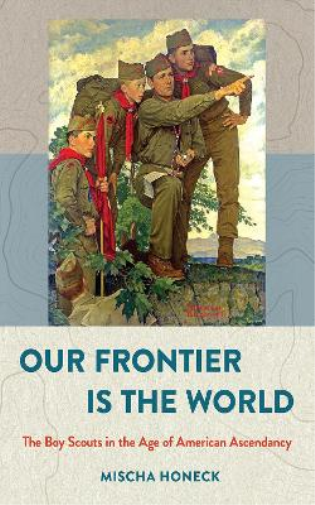
The Boy Scouts in the Age of American Ascendancy. Mischa Honeck’s Our Frontier Is the World is a provocative account of how the Boy Scouts echoed and enabled American global expansion in the twentieth century.The Boy Scouts of America (BSA) has long been a standard bearer for national identity. The core values of the organization have, since its founding in 1910, shaped what it means to be an. Mischa Honeck’s Our Frontier Is the World is a provocative account of how the Boy Scouts echoed and enabled American global expansion in the twentieth century. The Boy Scouts of America (BSA) has long been a standard bearer for national identity. The core values of the organization have, since its founding in 1910, shaped what it means to be an American boy and man. As Honeck shows, those masculine values had implications that extended far beyond the borders of the United States. Writing the global back into the history of one of the country’s largest youth organizations, Our Frontier Is the World details how the BSA operated as a vehicle of empire from the Progressive Era up to the countercultural moment of the 1960s. American boys and men wearing the Scout uniform never simply hiked local trails to citizenship; they forged ties with their international peers, camped in foreign lands, and started troops on overseas military bases. Scouts traveled to Africa and even sailed to icy Antarctica, hoisting the American flag and standing as models of loyalty, obedience, and bravery. Through scouting America’s complex engagements with the world were presented as honorable and playful masculine adventures abroad. Innocent fun and earnest commitment to doing a good turn, of course, were not the whole story. Honeck argues that the good-natured Boy Scout was a ready means for soft power abroad and gentle influence where American values, and democratic capitalism, were at stake. In other instances the BSA provided a pleasant cover for imperial interventions that required coercion and violence. At Scouting’s global frontiers the stern expression of empire often lurked behind the smile of a boy.
DELIVERY & RETURNS
UK Delivery:
- Free delivery on all orders of £10 or more.
- £1.49 delivery fee on orders below £10.
- UK orders are shipped via Royal Mail 2nd Class.
International Delivery:
- Flat rate delivery charges vary by country.
Dispatch and Delivery Times:
- All orders are shipped from our warehouse in Northampton, UK as soon as stock is available.
- UK mainland orders typically arrive within 3-7 working days via Royal Mail 2nd Class.
- International estimated delivery times:
- Europe & Channel Islands: 7 to 10 working days
- USA: 7 to 15 working days
- Rest of the World: 9 to 30 working days
View our full delivery infomation here.
-
OVER
2 MILLION PRODUCTS
-
60 MILLION CUSTOMERS
ACROSS 190 COUNTRIES
You might also like
Loading recommendations...