


Black Women’s Christian Activism
Black Women’s Christian Activism
Book
Couldn't load pickup availability
Join our rewards scheme and earn reward points on this purchase!
Earn points on this!
Sign in or Sign up!- Release Date: 03/04/2018
- Barcode: 9781479814817
- Genre: Philosophy & Spirituality
- Subgenre: Society & Culture

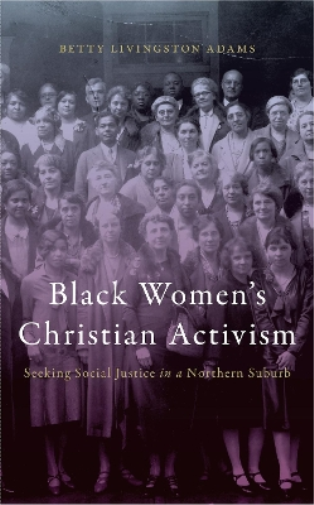

Black Women’s Christian Activism
Couldn't load pickup availability
Collapsible content
DESCRIPTION
Seeking Social Justice in a Northern Suburb. 2017 Wilbur Non-Fiction Award Recipient
Winner of the 2018 Author's Award in scholarly non-fiction, presented by the New Jersey Studies Academic Alliance
Winner, 2020 Kornitzer Book Prize, given by Drew University
Examines the oft overlooked role of non-elite black women in the growth of northern suburbs and American Protestantism in the first half of the twentieth century
When a domestic servant named Violet Johnson moved to the affluent white suburb of Summit, New Jersey in 1897, she became one of just barely a hundred black residents in the town of six thousand. In this avowedly liberal Protestant community, the very definition of “the suburbs” depended on observance of unmarked and fluctuating race and class barriers. But Johnson did not intend to accept the status quo. Establishing a Baptist church a year later, a seemingly moderate act that would have implications far beyond weekly worship, Johnson challenged assumptions of gender and race, advocating for a politics of civic righteousness that would grant African Americans an equal place in a Christian nation. Johnson’s story is powerful, but she was just one among the many working-class activists integral to the budding days of the civil rights movement.
Focusing on the strategies and organizational models church women employed in the fight for social justice, Adams tracks the intersections of politics and religion, race and gender, and place and space in a New York City suburb, a local example that offers new insights on northern racial oppression and civil rights protest. As this book makes clear, religion made a key difference in the lives and activism of ordinary black women who lived, worked, and worshiped on the margin during this tumultuous time.
DELIVERY & RETURNS
UK Delivery:
- Free delivery on all orders of £10 or more.
- £1.49 delivery fee on orders below £10.
- UK orders are shipped via Royal Mail 2nd Class.
International Delivery:
- Flat rate delivery charges vary by country.
Dispatch and Delivery Times:
- All orders are shipped from our warehouse in Northampton, UK within 48 hours of receipt during working hours.
- UK mainland orders typically arrive within 3-5 working days via Royal Mail 2nd Class.
- International estimated delivery times:
- Europe & Channel Islands: 7 to 10 working days
- USA: 7 to 15 working days
- Rest of the World: 9 to 21 working days
View our full delivery infomation here.
-
OVER
2 MILLION PRODUCTS
-
60 MILLION CUSTOMERS
ACROSS 190 COUNTRIES
You might also like
Loading recommendations...