


Abstraction in Modernism and Modernity
Abstraction in Modernism and Modernity
Hardback
Couldn't load pickup availability
Join our rewards scheme and earn reward points on this purchase!
Earn points on this!
Sign in or Sign up!- Release Date: 30/04/2023
- Barcode: 9781474461658
- Genre: Arts & Photography
- Subgenre: Philosophy & Spirituality

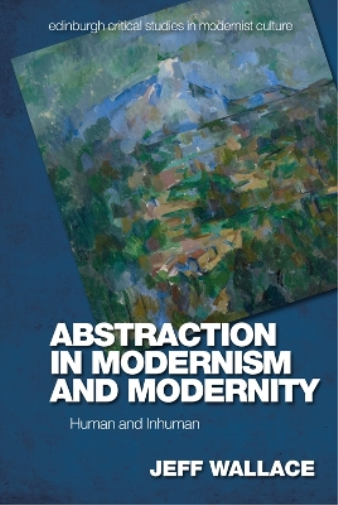

Abstraction in Modernism and Modernity
Couldn't load pickup availability
Collapsible content
DESCRIPTION
Human and Inhuman. Explores abstraction as a keyword in aesthetic modernism and in critical thinking since Marx. Explores abstraction as a keyword in aesthetic modernism and in critical thinking since MarxAbstraction as the 'missing keyword' in Raymond WilliamsThe writing of abstraction in Marx and MarxismPaul C zanne and Barnett Newman compared as writer-artists of abstraction New readings of abstraction and the inhuman in the experimental writing of Gertrude Stein, Wallace Stevens and Samuel BeckettA close study of Beckett's 'Proustian equation' and its role in a transformed thinking of abstractionAbstraction is one of the most important words in modernism and in the critical thought of modernity, yet its complex work is invariably hidden in plain sight. What do we want from abstraction? Does it refer to thought, or to art? Is it a term of reproach, or of affirmation? Beyond these distinctions, Jeff Wallace's new intellectual history of abstraction in modernism and modernity proposes that abstraction is always uniquely concerned with the importance and revaluation of the inhuman in and for the human. Wallace's case studies range across the writings of Raymond Williams and Paul Val ry, Marx and Marxist aesthetics, the discourse on abstract visual art in C zanne, Kandinsky, Mondrian and Newman, the literary experimentalisms of Gertrude Stein, Wallace Stevens and Samuel Beckett, and the twenty-first-century legacies of modernist abstraction in two forms: the post-Deleuzian resurgence of interest in the philosophies of William James, Henri Bergson and A. N. Whitehead; and the act of looking at the abstract canvas in plays by Yasmina Reza, John Logan and Lee Hall. Contrary to habitual associations of abstraction's difficulty with the exclusivity of high modernism, Wallace finds an inclusive and democratic impulse at the heart of the difficulty itself the promise of an abstraction for all.
ADDITIONAL DETAILS
DELIVERY & RETURNS
UK Delivery:
- Free delivery on all orders of £10 or more.
- £1.49 delivery fee on orders below £10.
- UK orders are shipped via Royal Mail 2nd Class.
International Delivery:
- Flat rate delivery charges vary by country.
Dispatch and Delivery Times:
- All orders are shipped from our warehouse in Northampton, UK as soon as stock is available.
- UK mainland orders typically arrive within 3-7 working days via Royal Mail 2nd Class.
- International estimated delivery times:
- Europe & Channel Islands: 7 to 10 working days
- USA: 7 to 15 working days
- Rest of the World: 9 to 30 working days
View our full delivery infomation here.
-
OVER
2 MILLION PRODUCTS
-
60 MILLION CUSTOMERS
ACROSS 190 COUNTRIES
You might also like
Loading recommendations...