

Resistance, Rebellion & Revolt
Resistance, Rebellion & Revolt
How Slavery Was Overthrown
Paperback
Couldn't load pickup availability
Join our rewards scheme and earn reward points on this purchase!
Earn points on this!
Sign in or Sign up!- Release Date: 03/12/2020
- Barcode: 9781472141453
- Genre: Non-Fiction
- Sub-Genre: History
- Publisher: Little, Brown & Company
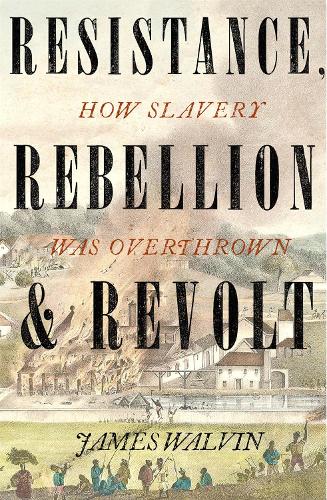

Resistance, Rebellion & Revolt
Couldn't load pickup availability
Collapsible content
DESCRIPTION
How Slavery Was Overthrown This long overdue, vivid and wide-ranging examination of the significance of the resistance of the enslaved themselves - from sabotage and running away to outright violent rebellion - shines fresh light on the end of slavery in the Atlantic World.
'Long before the friends of African freedom began to agitate for black freedom, the enslaved themselves had created their own strategies of resistance. In time, their defiance was to prove the crucial final factor in bringing down slavery itself.' James Walvin, in Resistance, Rebellion and Revolt
It is high time that this resistance, in addition to abolitionism and other factors, was given its due weight in seeking to understand the overthrow of slavery. Fundamentally, as Walvin shows so clearly, it was the implacable hatred of the enslaved for slavery and their strategies of resistance that made the whole system unsustainable and, ultimately, brought about its downfall.
Walvin's approach is original, too, in looking at the Atlantic world as a whole, including the French and Spanish Empires and Brazil, as well as Britain's colonies. In doing so, he casts new light on one of the major shifts in Western history: in the three-hundred years following Columbus's landfall in the Americas, slavery had become a widespread and critical institution. It had seen twelve million Africans forced onto slave ships; a forced migration that had had seismic consequences for Africa. It had transformed the Americas and materially enriched the Western world.
It had also been largely unquestioned - in Europe at least, and among slave owners, traders and those who profited from the system.
Yet, within a mere seventy-five years during the nineteenth century, slavery had vanished from the Americas: it had declined, collapsed and been destroyed by a complexity of forces that, to this day, remains disputed. As Walvin shows so clearly here, though, it was in large part overthrown by those it had enslaved.
DELIVERY & RETURNS
UK Delivery:
- Free delivery on all orders of £10 or more.
- £1.49 delivery fee on orders below £10.
- UK orders are shipped via Royal Mail 2nd Class.
International Delivery:
- Flat rate delivery charges vary by country.
Dispatch and Delivery Times:
- All orders are shipped from our warehouse in Northampton, UK as soon as stock is available.
- UK mainland orders typically arrive within 3-7 working days via Royal Mail 2nd Class.
- International estimated delivery times:
- Europe & Channel Islands: 7 to 10 working days
- USA: 7 to 15 working days
- Rest of the World: 9 to 30 working days
View our full delivery infomation here.
-
OVER
2 MILLION PRODUCTS
-
60 MILLION CUSTOMERS
ACROSS 190 COUNTRIES
You might also like
Loading recommendations...