

Making Computers Accessible
Making Computers Accessible
Disability Rights and Digital Technology
Hardback
Couldn't load pickup availability
Join our rewards scheme and earn reward points on this purchase!
Earn points on this!
Sign in or Sign up!- Release Date: 27/07/2015
- Barcode: 9781421416465
- Imprint: Johns Hopkins University Press
- Publisher: Johns Hopkins University Press
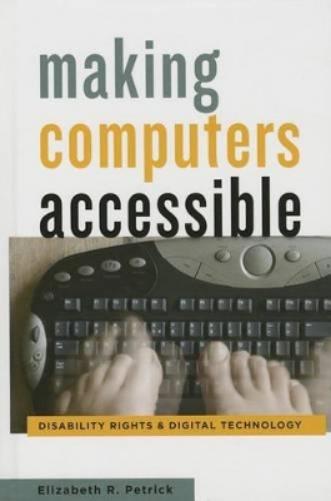

Making Computers Accessible
Couldn't load pickup availability
Collapsible content
DESCRIPTION
Disability Rights and Digital Technology
Bridging the history of technology, science and technology studies, and disability studies, this book traces the psychological, cultural, and economic evolution of a consumer culture aimed at individuals with disabilities, who increasingly rely on personal computers to make their lives richer and more interconnected.
In 1974, not long after developing the first universal optical character recognition technology, Raymond Kurzweil struck up a conversation with a blind man on a flight. Kurzweil explained that he was searching for a use for his new software. The blind man expressed interest: One of the frustrating obstacles that blind people grappled with, he said, was that no computer program could translate text into speech. Inspired by this chance meeting, Kurzweil decided that he must put his new innovation to work to "overcome this principal handicap of blindness." By 1976, he had built a working prototype, which he dubbed the Kurzweil Reading Machine. This type of innovation demonstrated the possibilities of computers to dramatically improve the lives of people living with disabilities. In Making Computers Accessible, Elizabeth R. Petrick tells the compelling story of how computer engineers and corporations gradually became aware of the need to make computers accessible for all people.Motivated by user feedback and prompted by legislation such as the Americans with Disabilities Act, which offered the promise of equal rights via technological accommodation, companies developed sophisticated computerized devices and software to bridge the accessibility gap. People with disabilities, Petrick argues, are paradigmatic computer users, demonstrating the personal computer's potential to augment human abilities and provide for new forms of social, professional, and political participation. Bridging the history of technology, science and technology studies, and disability studies, this book traces the psychological, cultural, and economic evolution of a consumer culture aimed at individuals with disabilities, who increasingly rely on personal computers to make their lives richer and more interconnected.
DELIVERY & RETURNS
UK Delivery:
- Free delivery on all orders of £10 or more.
- £1.49 delivery fee on orders below £10.
- UK orders are shipped via Royal Mail 2nd Class.
International Delivery:
- Flat rate delivery charges vary by country.
Dispatch and Delivery Times:
- All orders are shipped from our warehouse in Northampton, UK within 48 hours of receipt during working hours.
- UK mainland orders typically arrive within 3-5 working days via Royal Mail 2nd Class.
- International estimated delivery times:
- Europe & Channel Islands: 7 to 10 working days
- USA: 7 to 15 working days
- Rest of the World: 9 to 21 working days
View our full delivery infomation here.
-
OVER
2 MILLION PRODUCTS
-
60 MILLION CUSTOMERS
ACROSS 190 COUNTRIES
You might also like
Loading recommendations...