

Lost Girls
Lost Girls
Paperback
Couldn't load pickup availability
Join our rewards scheme and earn reward points on this purchase!
Earn points on this!
Sign in or Sign up!- Release Date: 27/10/2012
- Barcode: 9781421407722
- Genre: History
- Subgenre: Society & Culture
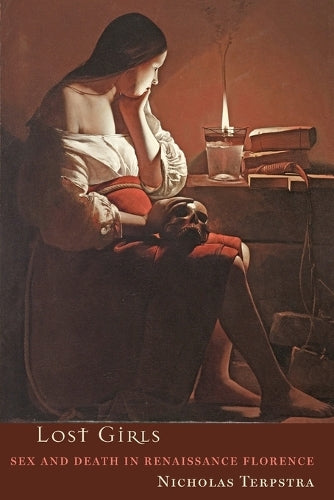

Lost Girls
Couldn't load pickup availability
Collapsible content
DESCRIPTION
Sex and Death in Renaissance Florence
Terpstra's meticulous investigation not only uncovers the sad fate of the lost girls of the Casa della Pieta but explores broader themes, including gender relations, public health, church politics, and the challenges girls and adolescent women faced in Renaissance Florence.
In 1554, a group of idealistic laywomen founded a home for homeless and orphaned adolescent girls in one of the worst neighborhoods in Florence. Of the 526 girls who lived in the home during its fourteen-year tenure, only 202 left there alive. Struck by the unusually high mortality rate, Nicholas Terpstra sets out to determine what killed the lost girls of the House of Compassion shelter (Casa della Pieta). Reaching deep into the archives' letters, ledgers, and records from both inside and outside the home, he slowly pieces together the tragic story. The Casa welcomed girls in bad health and with little future, hoping to save them from an almost certain life of poverty and drudgery. Yet this "safe" house was cruelly dangerous. Victims of Renaissance Florence's sexual politics, these young women were at the disposal of the city's elite men, who treated them as property meant for their personal pleasure.With scholarly precision and journalistic style, Terpstra uncovers and chronicles a series of disturbing leads that point to possible reasons so many girls died: hints of routine abortions, basic medical care for sexually transmitted diseases, and appalling conditions in the textile factories where the girls worked. Church authorities eventually took the Casa della Pieta away from the women who had founded it and moved it to a better part of Florence. Its sordid past was hidden, until now, in an official history that bore little resemblance to the orphanage's true origins. Terpstra's meticulous investigation not only uncovers the sad fate of the lost girls of the Casa della Pieta but also explores broader themes, including gender relations, public health, church politics, and the challenges girls and adolescent women faced in Renaissance Florence.
DELIVERY & RETURNS
UK Delivery:
- Free delivery on all orders of £10 or more.
- £1.49 delivery fee on orders below £10.
- UK orders are shipped via Royal Mail 2nd Class.
International Delivery:
- Flat rate delivery charges vary by country.
Dispatch and Delivery Times:
- All orders are shipped from our warehouse in Northampton, UK within 48 hours of receipt during working hours.
- UK mainland orders typically arrive within 3-5 working days via Royal Mail 2nd Class.
- International estimated delivery times:
- Europe & Channel Islands: 7 to 10 working days
- USA: 7 to 15 working days
- Rest of the World: 9 to 21 working days
View our full delivery infomation here.
-
OVER
2 MILLION PRODUCTS
-
60 MILLION CUSTOMERS
ACROSS 190 COUNTRIES
You might also like
Loading recommendations...