

English Culture
English Culture
From the 18th Century to the Present Day
Hardback
Couldn't load pickup availability
Join our rewards scheme and earn reward points on this purchase!
Earn points on this!
Sign in or Sign up!- Release Date: 15/10/2024
- Barcode: 9781398118492
- Genre: History
- Sub-Genre: Social & Cultural History
- Imprint: Amberley Publishing
- Publisher: Amberley Publishing
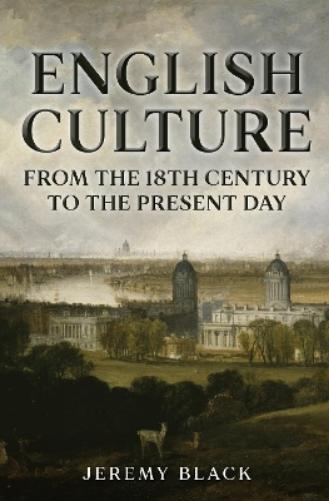

English Culture
Couldn't load pickup availability
Collapsible content
DESCRIPTION
From the 18th Century to the Present Day Culture. What is it? Paintings or television? The National Gallery or Harry Styles? There is of course no one answer, no agreement. But what is clear is that culture, however defined, plays a key role as a form and content of identity, while, in turn, it is affected by changes in the patterns and pressures of identification. In Emma, Jane Austen praised Shakespeare as a touchstone of Englishness and wrote: ‘It was a sweet view – sweet to the eye and the mind. English verdure, English culture, English comfort, seen under a sun bright, without being oppressive.’ Would anyone today write the same words without irony? Professor Black charts the changes in English culture over three centuries. Turnpikes, steam engines, canals, novels, landscape gardens, Adam Smith et al were scarcely indicators of an unchanging world; but Jeremy Black points out that the early period analysed was profoundly historic. The historical bent of the years from the Glorious Revolution to the Great Reform Act could be found in thought, religion, politics, law, society, literature, art, architecture, music, sculpture, and much else, and was true at all levels of society. And history still defines England today, even in its denial or rejection, with the destruction of monuments. History was presented as moving in an inevitable direction, one of steady improvement, a teleological progressivism. Black observes that ‘In the 18th century, the public market for an explicitly English engagement with English culture and history became far stronger, in turn creating models for the future. Even if a shared inheritance, the past was interpreted to emphasise Englishness.’ Then what happened?
Jeremy Black turns his trenchant eye to the development of English culture since the eighteenth century - how does it reflect political and social conditions of the time? Here, Black looks at this question while offering an important and original account of English history.
DELIVERY & RETURNS
UK Delivery:
- Free delivery on all orders of £10 or more.
- £1.49 delivery fee on orders below £10.
- UK orders are shipped via Royal Mail 2nd Class.
International Delivery:
- Flat rate delivery charges vary by country.
Dispatch and Delivery Times:
- All orders are shipped from our warehouse in Northampton, UK as soon as stock is available.
- UK mainland orders typically arrive within 3-7 working days via Royal Mail 2nd Class.
- International estimated delivery times:
- Europe & Channel Islands: 7 to 10 working days
- USA: 7 to 15 working days
- Rest of the World: 9 to 30 working days
View our full delivery infomation here.
-
OVER
2 MILLION PRODUCTS
-
60 MILLION CUSTOMERS
ACROSS 190 COUNTRIES
You might also like
Loading recommendations...