

Chemistry, Biology and Pharmacology of Lichen
Chemistry, Biology and Pharmacology of Lichen
Hardback
Couldn't load pickup availability
Join our rewards scheme and earn reward points on this purchase!
Earn points on this!
Sign in or Sign up!- Release Date: 04/07/2024
- Barcode: 9781394190676
- Imprint: Wiley
- Publisher: John Wiley & Sons
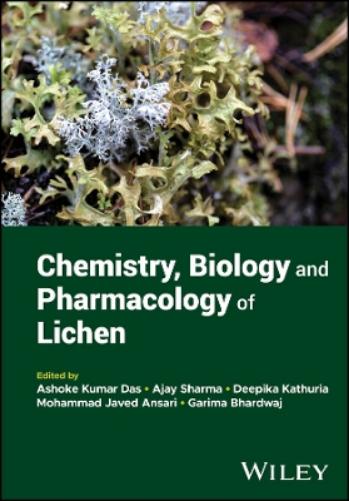

Chemistry, Biology and Pharmacology of Lichen
Couldn't load pickup availability
Collapsible content
DESCRIPTION
Understand the properties and applications of one of the world’s most ubiquitous flora Lichen is a single entity comprising two or more organisms—most typically algae and fungus—in a symbiotic relationship. It is one of the planet’s most abundant categories of flora, with over 25,000 known species across all regions of the globe. Lichens’ status as a rich source of bioactive metabolites and phytochemicals, as well as their potential as bio-indicators, has given them an increasingly prominent role in modern research into medicine, cosmetics, food, and more. Chemistry, Biology and Pharmacology of Lichen provides a comprehensive overview of these bountiful flora and their properties. It provides not only in-depth analysis of lichen physiology and ecology, but also a thorough survey of their modern and growing applications. It provides all the tools readers need to domesticate lichen and bring their properties to bear on some of humanity’s most intractable scientific problems. Chemistry, Biology and Pharmacology of Lichen readers will also find: Chemistry, Biology and Pharmacology of Lichen is ideal for scientists and researchers in ethnobotany, pharmacology, chemistry, and biology, as well as teachers and students with an interest in biologically important lichens. It is gratifying to see the enthusiasm of Indian mycologists for lichens grow over the last 25 years, especially in their possible exploitation. That this book has a staggering 63 contributors, of which all but seven are from India or Pakistan, is a testament to that enthusiasm. Following a series of nine chapters on general aspects of lichen biology, conservation and ecology, are ten on different aspects of actual or prospected applications. These cover traditional uses, therapeutic potential of bioactive compounds, antioxidant properties, antimicrobial activities, anticancer drugs, food value, perfumery and cosmetics, bioindication, and nanoparticles. One contribution compiles ethnobotanical and pharmacological properties of four particular genera (Cetraria, Cladonia, Parmelia s.lat., and Usnea). The compilations of pertinent very scattered publications and reports will be of value for anyone wishing to explore particular activities further, especially as starting points for fresh research. However, it has to be recognized that many of the studies commented on, especially in relation to potential medical applications, are based on individual rather small-scale studies (and not always on precisely identified material). Further, in many chapters, published reports are carefully compiled but generally accepted without indications of their limitations. I was concerned to see that in the chapter on taxonomy, lichens were not presented from the standpoint of the phylogenetic placements of the fungal partners (to which the “lichen” name applies). Instead, it is Zahlbruckner’s system that is used, treating them as a separate group divided into Ascolichens, Basidiolichens, and categories such as Gymnocarpeae. In justification they say this “has been widely adopted by all British lichenologists” and give a reference to a 1959 publication! It is sad to see such obsolete treatments being perpetuated, as in addition to misleading readers it may inhibit them from looking into what is known of the activities and properties of related non-lichen fungi and their products. There are also inconsistencies in the scientific names used, and erratic use of author citations (which in any case have no place in nontaxonomic works). It is unfortunate that a work on a subject of such potentially wide interest was evidently not as critically reviewed and edited to the standard I would have expected from such a prestigious and respected publisher.
David L. Hawksworth, 2024 Mycological book news, Fungal Biology Reviews, Volume 50, 2024, 100399. https://doi.org/10.1016/j.fbr.2024.100399
ADDITIONAL DETAILS
DELIVERY & RETURNS
UK Delivery:
- Free delivery on all orders of £10 or more.
- £1.49 delivery fee on orders below £10.
- UK orders are shipped via Royal Mail 2nd Class.
International Delivery:
- Flat rate delivery charges vary by country.
Dispatch and Delivery Times:
- All orders are shipped from our warehouse in Northampton, UK within 48 hours of receipt during working hours.
- UK mainland orders typically arrive within 3-5 working days via Royal Mail 2nd Class.
- International estimated delivery times:
- Europe & Channel Islands: 7 to 10 working days
- USA: 7 to 15 working days
- Rest of the World: 9 to 21 working days
View our full delivery infomation here.
-
OVER
2 MILLION PRODUCTS
-
60 MILLION CUSTOMERS
ACROSS 190 COUNTRIES
You might also like
Loading recommendations...