

Anthropology in the Public Arena
Anthropology in the Public Arena
Hardback
Couldn't load pickup availability
Join our rewards scheme and earn reward points on this purchase!
Earn points on this!
Sign in or Sign up!- Release Date: 22/03/2013
- Barcode: 9781118475478
- Genre: Society & Culture
- Subgenre: Social Sciences
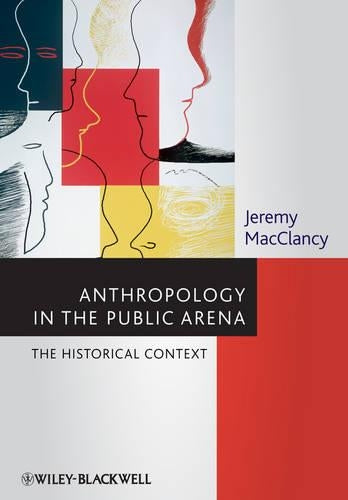

Anthropology in the Public Arena
Couldn't load pickup availability
Collapsible content
DESCRIPTION
Historical and Contemporary Contexts “A critical insider, Jeremy MacClancy celebrates maverick anthropologists who transgressed academic frontiers, and urges his colleagues to engage the public. This is an entertaining, original, and provocative book.” “Jeremy MacClancy insightfully expands the history of anthropology beyond the confines of the academy, showing us how a collection of poets, popularizers, critics, surrealists, neo-Freudians, and iconoclast savants shaped anthropology’s imagination.” ANTHROPOLOGY IN THE PUBLIC ARENA This detailed survey of the evolution of anthropology in Britain is also a spirited defence of the public as well as professional role of the discipline. The author argues for a broader vision of the value of anthropological knowledge that allows for the creative contributions of popular scientists and literary figures who often capture the public imagination and add much to our knowledge of human social relations. Informed by original archival research and engaging narratives of the larger-than-life personalities of public intellectuals, the author reveals the contributions of neglected but crucial figures such as John Layard, Geoffrey Gorer, Robert Graves, and the originators of Mass Observation, today’s online repository of anthropological data. MacClancy is guided by the notion that anthropology’s continued dynamism requires an alliance of interests, popular and academic, that will recover marginalized studies and recognize the value of contributions from outside the university research community. Its synthesis of diverse topics illuminates an anthropology that enriches the popular cultural discourse and serves as a versatile tool for exploring pressing issues of social organization and development. The reframed narrative of British anthropological history that emerges is as integral to the future of the subject as it is informative about its past.
This articulate and authoritative survey of both the popular and academic trends in anthropology demonstrates the broad relevance of anthropological knowledge and argues for a more inclusive conception of the discipline that engages the public imagination.
ANTHROPOLOGY IN THE PUBLIC ARENA
Adam Kuper, Professor Emeritus, University of Cambridge
David Price, St Martin’s University,Washington
DELIVERY & RETURNS
UK Delivery:
- Free delivery on all orders of £10 or more.
- £1.49 delivery fee on orders below £10.
- UK orders are shipped via Royal Mail 2nd Class.
International Delivery:
- Flat rate delivery charges vary by country.
Dispatch and Delivery Times:
- All orders are shipped from our warehouse in Northampton, UK as soon as stock is available.
- UK mainland orders typically arrive within 3-7 working days via Royal Mail 2nd Class.
- International estimated delivery times:
- Europe & Channel Islands: 7 to 10 working days
- USA: 7 to 15 working days
- Rest of the World: 9 to 30 working days
View our full delivery infomation here.
-
OVER
2 MILLION PRODUCTS
-
60 MILLION CUSTOMERS
ACROSS 190 COUNTRIES
You might also like
Loading recommendations...