

Literature and Ecotheology
Literature and Ecotheology
From Chaos to Cosmos
Paperback
Couldn't load pickup availability
Join our rewards scheme and earn reward points on this purchase!
Earn points on this!
Sign in or Sign up!- Release Date: 26/12/2025
- Barcode: 9781032769059
- Imprint: Routledge
- Publisher: Taylor & Francis
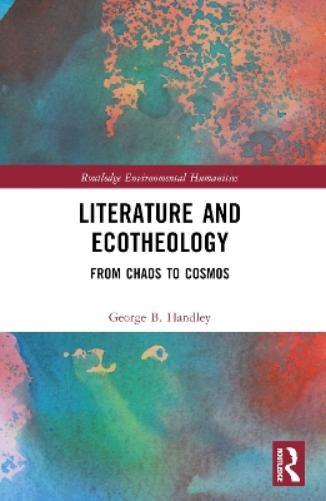

Literature and Ecotheology
Couldn't load pickup availability
Collapsible content
DESCRIPTION
From Chaos to Cosmos This book challenges us in a time of climate crisis to find more common ground between the dual projects of ecocriticism and ecotheology. It will be of interest to students, scholars and researchers interested in ecotheology, religious studies, environmental literature, the environmental humanities, and environmental studies more broadly. Literature and Ecotheology: From Chaos to Cosmos challenges us in a time of climate crisis to find more common ground between the dual projects of ecocriticism and ecotheology. This book argues that in our postsecular age, literature has become an important repository of theological wisdom that can, like formal work in ecotheology, provide the moral grounds for environmental care. However, for any cosmological understanding to be adequate to the challenges before us, it must be responsive to the often-painful contingencies and uncertainties that inhere in the cosmos, something that both ecocriticism and ecotheology have often neglected. After a treatment of the ecocritical and ecotheological questions that pertain to the religious/secular divide, the study then turns to four contemporary American writers—Annie Dillard, Cormac McCarthy, Marilynne Robinson, and David James Duncan—as examples. Each uses the contingency of literary form and its promise of wholeness in order to imagine reasons for hope in light of the unpredictability and untold human and more-than-human suffering that lie at the heart of nature. The book will be of interest to students, scholars and researchers interested in ecotheology, religious studies, environmental literature, the environmental humanities, and environmental studies more broadly. It offers a needed paradigm shift in how Western societies have tended to misuse both secularity and religion.
DELIVERY & RETURNS
UK Delivery:
- Free delivery on all orders of £10 or more.
- £1.49 delivery fee on orders below £10.
- UK orders are shipped via Royal Mail 2nd Class.
International Delivery:
- Flat rate delivery charges vary by country.
Dispatch and Delivery Times:
- All orders are shipped from our warehouse in Northampton, UK within 48 hours of receipt during working hours.
- UK mainland orders typically arrive within 3-5 working days via Royal Mail 2nd Class.
- International estimated delivery times:
- Europe & Channel Islands: 7 to 10 working days
- USA: 7 to 15 working days
- Rest of the World: 9 to 21 working days
View our full delivery infomation here.
-
OVER
2 MILLION PRODUCTS
-
60 MILLION CUSTOMERS
ACROSS 190 COUNTRIES
You might also like
Loading recommendations...