

Social Media Television and Distributional Aesthetics
Social Media Television and Distributional Aesthetics
Hardback
Couldn't load pickup availability
Join our rewards scheme and earn reward points on this purchase!
Earn points on this!
Sign in or Sign up!- Release Date: 10/03/2025
- Barcode: 9781032657806
- Genre: Non-Fiction
- Sub-Genre: Society & Culture
- Imprint: Routledge
- Publisher: Taylor & Francis
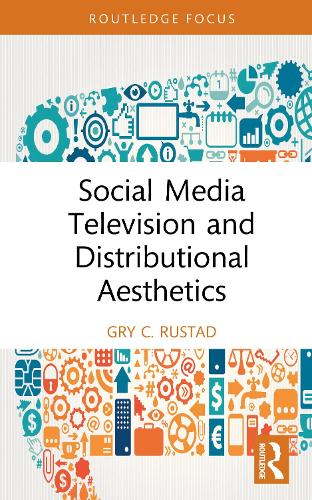

Social Media Television and Distributional Aesthetics
Couldn't load pickup availability
Collapsible content
DESCRIPTION
This book explores the distinct fictional form that merges genres, structures and affordances of television with those of social media. It will be relevant for television studies, social media studies, media aesthetics, and visual and digital culture. Social Media Television and Distributional Aesthetics explores this distinct fictional form that merges the genres, structures and affordances of television with those of social media and what it entails for contemporary television and media culture and for our experience of new and old media in everyday life. Centred around five key case studies – Skam, Lik meg, Dead Girls Detective Agency, Content and Eva.Stories – this book offers insight into how different social media platforms facilitate distinct aesthetics and content; transnational aspects of social media television; and how different production cultures and industries operate in its production. This analysis extrapolated out into broader principles and theoretical arguments that will help scholars working on a wide variety of questions of television and social media, digitalization, technology, convergence, media aesthetics, production cultures, audience cultures and globalization in the future. Developing new theoretical perspectives to understand what social media television is and can be and creating new methodological frameworks to analyze television and new media as an aesthetic experience, the author proposes distributional aesthetic as the main analytical framework arguing that distribution can be understood as an aesthetic form defined as a situated aesthetic experience in time and space. This book will be relevant for scholars, instructors, students and practitioners working within television studies, social media studies, media aesthetics, and visual and digital culture.
DELIVERY & RETURNS
UK Delivery:
- Free delivery on all orders of £10 or more.
- £1.49 delivery fee on orders below £10.
- UK orders are shipped via Royal Mail 2nd Class.
International Delivery:
- Flat rate delivery charges vary by country.
Dispatch and Delivery Times:
- All orders are shipped from our warehouse in Northampton, UK within 48 hours of receipt during working hours.
- UK mainland orders typically arrive within 3-5 working days via Royal Mail 2nd Class.
- International estimated delivery times:
- Europe & Channel Islands: 7 to 10 working days
- USA: 7 to 15 working days
- Rest of the World: 9 to 21 working days
View our full delivery infomation here.
-
OVER
2 MILLION PRODUCTS
-
60 MILLION CUSTOMERS
ACROSS 190 COUNTRIES
You might also like
Loading recommendations...