

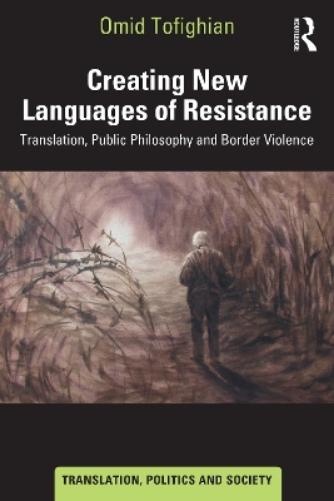
Creating New Languages of Resistance
Creating New Languages of Resistance
Translation, Public Philosophy and Border Violence
Paperback
Couldn't load pickup availability
Join our rewards scheme and earn reward points on this purchase!
Earn points on this!
Sign in or Sign up!- Release Date: 30/04/2025
- Barcode: 9781032596266
- Genre: Non-Fiction
- Sub-Genre: Business & Finance
- Imprint: Routledge
- Publisher: Taylor & Francis

Creating New Languages of Resistance
Couldn't load pickup availability
Collapsible content
DESCRIPTION
Translation, Public Philosophy and Border Violence Omid Tofighian has been engaged in philosophical, artistic and political work with displaced, exiled and incarcerated peoples for 25 years. Creating New Languages of Resistance is an intellectual and personal reflection on creative resistance; addressesing critical issues pertaining to epistemic injustice, kyriarchy and border violence. Omid Tofighian has been engaged in collaborative philosophical, artistic and political work with displaced, exiled and incarcerated peoples for 25 years. These interdisciplinary and transdisciplinary collaborations include co-authoring different genres of writing in English; co-creation and translation into English; and shared intellectual and artistic projects. The most notable example is his translation and collaboration in Behrouz Boochani’s award winning book No Friend but the Mountains: Writing from Manus Prison (2018). Creating New Languages of Resistance is an intellectual and personal reflection on creative resistance; it addresses critical issues pertaining to epistemic injustice, kyriarchy and border violence. Incorporating scholarship, different literary genres, exclusive interviews, media articles and notes on translation, this rigorous and accessible study examines the ‘shared philosophical activity’ Tofighian participates in with different collaborators. It suggests experimental and collaborative ways for producing and analysing similar texts and cultural productions; creates new spaces and frameworks for thinking about displacement and exile; and raises compelling questions and issues for people interested in researching and working to end border violence, bordering and intersectional discrimination. Presenting a special rationale and philosophical vision about collaboration and co-creation in extreme situations, this is key reading for students, scholars and general readers interested in critical and cultural border studies, translation studies, public philosophy, literatures of resistance, coloniality and decoloniality, identity and positionality.
DELIVERY & RETURNS
UK Delivery:
- Free delivery on all orders of £10 or more.
- £1.49 delivery fee on orders below £10.
- UK orders are shipped via Royal Mail 2nd Class.
International Delivery:
- Flat rate delivery charges vary by country.
Dispatch and Delivery Times:
- All orders are shipped from our warehouse in Northampton, UK as soon as stock is available.
- UK mainland orders typically arrive within 3-7 working days via Royal Mail 2nd Class.
- International estimated delivery times:
- Europe & Channel Islands: 7 to 10 working days
- USA: 7 to 15 working days
- Rest of the World: 9 to 30 working days
View our full delivery infomation here.
-
OVER
2 MILLION PRODUCTS
-
60 MILLION CUSTOMERS
ACROSS 190 COUNTRIES
You might also like
Loading recommendations...