


Beyond Polarized American Democracy
Beyond Polarized American Democracy
Paperback
Couldn't load pickup availability
Join our rewards scheme and earn reward points on this purchase!
Earn points on this!
Sign in or Sign up!- Release Date: 11/08/2023
- Barcode: 9781032474137
- Genre: Society & Culture
- Subgenre: Social Sciences

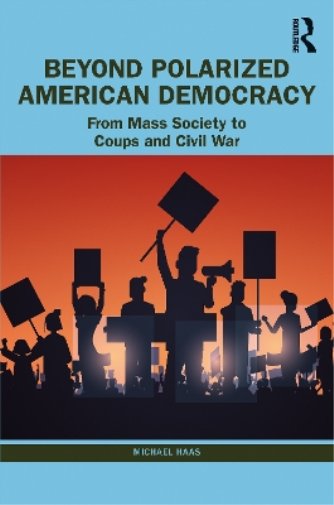

Beyond Polarized American Democracy
Couldn't load pickup availability
Collapsible content
DESCRIPTION
From Mass Society to Coups and Civil War. Polarized American Democracy identifies and suggests remedies for potential nonviolent civil wars, by reviewing governmental and military resources, counteracting the ideological contest through political innovations, and drawing from aspects of the sociological Mass Society Paradigm. Civil war in the United States is now a mainstream topic due to apparent signs of ongoing planning. This book reveals why in several ways. First, four major ideological drivers of possible conflict are identified. Next, ten arenas of ongoing nonviolent civil war are traced as increasingly for micro-level violence. Then several dozen alternative scenarios are traced to explain how civil war could break out very soon. Finally, measures are delineated about how the country might prevent calamity. Anarchists, Christian Nationalists, Libertarians, and Triumphalists are determined to impose their views on the diverse nation and reduce opponents to second-class status. They demonstrate their blatant determination through nonviolent political contests involving conspiracy theories, cultural differences, verbal contestation, anti-elitism, racism, well-armed groups with nationwide membership, political demonization, media disinformation, Congressional hyperpartisanship, reducing constitutional rights, and legal fights by some states against others. But often they go beyond and commit violence out of sheer enjoyment in making opponents suffer. Beyond Polarized American Democracy: From Mass Society to Coups and Civil War suggests remedies for each of ten types of nonviolent civil war, but most are long-term solutions that cannot deal with an imminent threat. Accordingly, the book reviews governmental and military resources as well as efforts to counteract the ideological contest through political innovations. The analysis flows from the sociological Mass Society Paradigm, which argues that democracy’s survival depends upon the ability of civil society to relay the needs of the people to institutions of government and provide effective pressure for corrective action. As developed to explain the rise of Nazism in Germany, the analysis applies lessons from studies of coups and civil wars to identify how to prevent the loss of democracy in the United States.
DELIVERY & RETURNS
UK Delivery:
- Free delivery on all orders of £10 or more.
- £1.49 delivery fee on orders below £10.
- UK orders are shipped via Royal Mail 2nd Class.
International Delivery:
- Flat rate delivery charges vary by country.
Dispatch and Delivery Times:
- All orders are shipped from our warehouse in Northampton, UK as soon as stock is available.
- UK mainland orders typically arrive within 3-7 working days via Royal Mail 2nd Class.
- International estimated delivery times:
- Europe & Channel Islands: 7 to 10 working days
- USA: 7 to 15 working days
- Rest of the World: 9 to 30 working days
View our full delivery infomation here.
-
OVER
2 MILLION PRODUCTS
-
60 MILLION CUSTOMERS
ACROSS 190 COUNTRIES
You might also like
Loading recommendations...