

The Routledge Handbook of Language and Humor
The Routledge Handbook of Language and Humor
Paperback
Couldn't load pickup availability
Join our rewards scheme and earn reward points on this purchase!
Earn points on this!
Sign in or Sign up!- Release Date: 29/08/2022
- Barcode: 9781032402239
- Genre: Language & Reference
- Subgenre: Linguistics
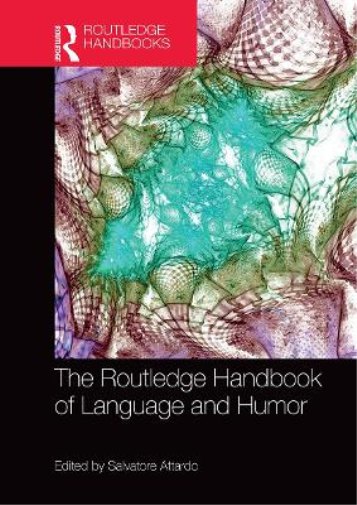

The Routledge Handbook of Language and Humor
Couldn't load pickup availability
Collapsible content
DESCRIPTION
The Routledge Handbook of Language and Humor presents the first ever comprehensive, in-depth treatment of all the sub-fields of the linguistics of humor. The reader will find a thorough historical, terminological, and theoretical introduction to the field, as well as detailed treatments of the various approaches to language and humor. The The Routledge Handbook of Language and Humor presents the first ever comprehensive, in-depth treatment of all the sub-fields of the linguistics of humor, broadly conceived as the intersection of the study of language and humor. The reader will find a thorough historical, terminological, and theoretical introduction to the field, as well as detailed treatments of the various approaches to language and humor. Deliberately comprehensive and wide-ranging, the handbook includes chapter-long treatments on the traditional topics covered by language and humor (e.g., teasing, laughter, irony, psycholinguistics, discourse analysis, the major linguistic theories of humor, translation) but also cutting-edge treatments of internet humor, cognitive linguistics, relevance theoretic, and corpus-assisted models of language and humor. Some chapters, such as the variationist sociolinguistcs, stylistics, and politeness are the first-ever syntheses of that particular subfield. Clusters of related chapters, such as conversation analysis, discourse analysis and corpus-assisted analysis allow multiple perspectives on complex trans-disciplinary phenomena. This handbook is an indispensable reference work for all researchers interested in the interplay of language and humor, within linguistics, broadly conceived, but also in neighboring disciplines such as literary studies, psychology, sociology, anthropology, etc. The authors are among the most distinguished scholars in their fields.
DELIVERY & RETURNS
UK Delivery:
- Free delivery on all orders of £10 or more.
- £1.49 delivery fee on orders below £10.
- UK orders are shipped via Royal Mail 2nd Class.
International Delivery:
- Flat rate delivery charges vary by country.
Dispatch and Delivery Times:
- All orders are shipped from our warehouse in Northampton, UK within 48 hours of receipt during working hours.
- UK mainland orders typically arrive within 3-5 working days via Royal Mail 2nd Class.
- International estimated delivery times:
- Europe & Channel Islands: 7 to 10 working days
- USA: 7 to 15 working days
- Rest of the World: 9 to 21 working days
View our full delivery infomation here.
-
OVER
2 MILLION PRODUCTS
-
60 MILLION CUSTOMERS
ACROSS 190 COUNTRIES
You might also like
Loading recommendations...