

Creating Third Spaces of Learning for Post-Capitalism
Creating Third Spaces of Learning for Post-Capitalism
Paperback
Couldn't load pickup availability
Join our rewards scheme and earn reward points on this purchase!
Earn points on this!
Sign in or Sign up!- Release Date: 31/03/2023
- Barcode: 9781032384290
- Genre: Society & Culture
- Subgenre: Children's Learning & Education
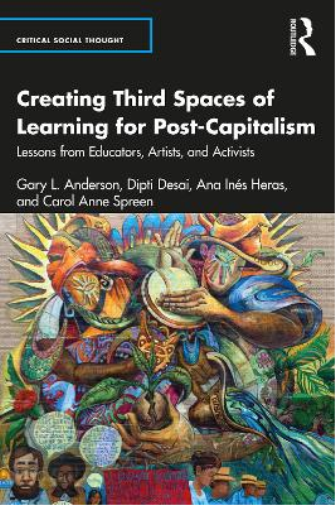

Creating Third Spaces of Learning for Post-Capitalism
Couldn't load pickup availability
Collapsible content
DESCRIPTION
Lessons from Educators, Artists, and Activists. In this book, the authors’ postcapitalist approach to change focuses less on what we need to dismantle, and more on what educators and activists are building in its place. This book is well suited to graduate and upper-level undergraduate courses in politics of education, sociology of education, and education policy. In this book, the authors’ post-capitalist approach to change focuses less on what we need to dismantle and more on what educators and activists are building in its place. Studying schools and other social organizations in the Global North and South, the authors identify and examine some of the most interesting counterhegemonic spaces in both formal and informal education today. They view these spaces through a lens of what Gloria Anzaldua and Homi Bhabha call borderlands or "third spaces." These third spaces are created in-between our lived cultural and social identities (first space) and the dominant culture that seeks to define us (second space). This book seeks to better understand how these third spaces conceive of learning, how they are created, the range of experiences among them, the obstacles they face, how they are sustained over time, and how they have built global networks of solidarity. The creation of global networks of third spaces not only signals a shift in progressive political strategy but also an expansion of what counts as spaces that are educational. This book is well suited to graduate and upper-level undergraduate courses in politics of education, sociology of education, education policy, as well as the humanities, sociology, political science, and the arts.
DELIVERY & RETURNS
UK Delivery:
- Free delivery on all orders of £10 or more.
- £1.49 delivery fee on orders below £10.
- UK orders are shipped via Royal Mail 2nd Class.
International Delivery:
- Flat rate delivery charges vary by country.
Dispatch and Delivery Times:
- All orders are shipped from our warehouse in Northampton, UK as soon as stock is available.
- UK mainland orders typically arrive within 3-7 working days via Royal Mail 2nd Class.
- International estimated delivery times:
- Europe & Channel Islands: 7 to 10 working days
- USA: 7 to 15 working days
- Rest of the World: 9 to 30 working days
View our full delivery infomation here.
-
OVER
2 MILLION PRODUCTS
-
60 MILLION CUSTOMERS
ACROSS 190 COUNTRIES
You might also like
Loading recommendations...