

Writing Manchuria: The Lives and Literature of Zhu Ti and Li Zhengzhong
Writing Manchuria: The Lives and Literature of Zhu Ti and Li Zhengzhong
Paperback
Couldn't load pickup availability
Join our rewards scheme and earn reward points on this purchase!
Earn points on this!
Sign in or Sign up!- Release Date: 28/11/2024
- Barcode: 9781032376318
- Genre: History
- Sub-Genre: Asian History
- Imprint: Routledge
- Publisher: Taylor & Francis
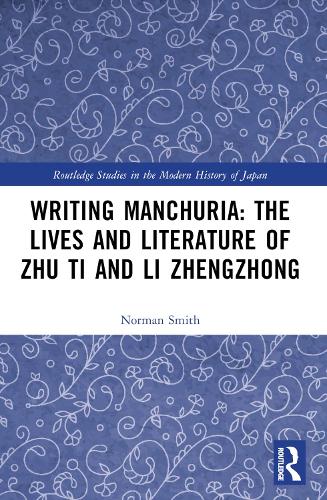

Writing Manchuria: The Lives and Literature of Zhu Ti and Li Zhengzhong
Couldn't load pickup availability
Collapsible content
DESCRIPTION
Writing Manchuria details the lives and translates a selection of fiction from one of the mid-twentieth century’s "four famous husband-wife writers" of China’s Northeast, who lived in the Japanese puppet state of Manchukuo: Li Zhengzhong (1921-2020) and Zhu Ti (1923-2012). Writing Manchuria details the lives and translates a selection of fiction from one of the mid-twentieth century’s "four famous husband-wife writers" of China’s Northeast, who lived in the Japanese puppet state of Manchukuo: Li Zhengzhong (1921–2020) and Zhu Ti (1923–2012). The writings herein were published from the late 1930s to the mid-1940s, in Manchukuo, north China, and Japan; their writings appeared in the most prominent Japanese-owned, Chinese-language journals and newspapers. This volume includes materials that were censored or banned by the Manchukuo authorities: Li Zhengzhong’s "Temptation" and "Frost Flowers," and Zhu Ti’s "Cross the Bo Sea" and "Little Linzi and her Family." Li Zhengzhong has been characterized as "an angry youth" while Zhu Ti’s work questioned contemporary gender ideals and the subjugation of women. Their writings – those that were censored or banned and those published – shed important light on Japanese imperialism and the Chinese literature that was produced in different regions, reflecting both official support and suppression. Writing Manchuria is the first English-language translation of their writings, and it will appeal to those interested in Chinese wartime literature, as well as contribute to understandings of imperialism and the varied forms it took across Japan’s vast war-time empire.
DELIVERY & RETURNS
UK Delivery:
- Free delivery on all orders of £10 or more.
- £1.49 delivery fee on orders below £10.
- UK orders are shipped via Royal Mail 2nd Class.
International Delivery:
- Flat rate delivery charges vary by country.
Dispatch and Delivery Times:
- All orders are shipped from our warehouse in Northampton, UK as soon as stock is available.
- UK mainland orders typically arrive within 3-7 working days via Royal Mail 2nd Class.
- International estimated delivery times:
- Europe & Channel Islands: 7 to 10 working days
- USA: 7 to 15 working days
- Rest of the World: 9 to 30 working days
View our full delivery infomation here.
-
OVER
2 MILLION PRODUCTS
-
60 MILLION CUSTOMERS
ACROSS 190 COUNTRIES
You might also like
Loading recommendations...