

Religion, Materialism and Ecology
Religion, Materialism and Ecology
Paperback
Couldn't load pickup availability
Join our rewards scheme and earn reward points on this purchase!
Earn points on this!
Sign in or Sign up!- Release Date: 31/05/2023
- Barcode: 9781032341408
- Genre: Society & Culture
- Sub-Genre: Sociology & Anthropology
- Imprint: Routledge
- Publisher: Taylor & Francis
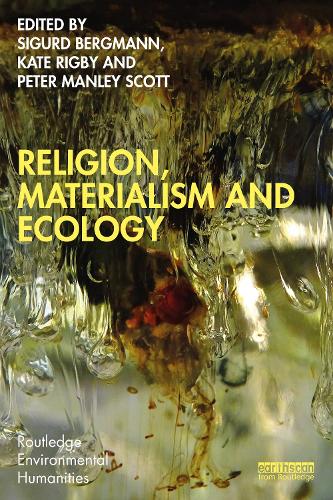

Religion, Materialism and Ecology
Couldn't load pickup availability
Collapsible content
DESCRIPTION
This volume by leading international scholars across religious studies and the environmental humanities advances a discussion on materialism in its many forms. For postgraduate students, researchers and scholars in religious studies, cultural anthropology, literary studies, philosophy and environmental studies. This timely collection of essays by leading international scholars across religious studies and the environmental humanities advances a lively discussion on materialism in its many forms. While there is little agreement on what ‘materialism’ means, it is evident that there is a resurgence in thinking about matter in more animated and active ways. The volume explores how debates concerning the new materialisms impinge on religious traditions and the extent to which religions, with their material culture and beliefs in the Divine within the material, can make a creative contribution to debates about ecological materialisms. Spanning a broad range of themes, including politics, architecture, hermeneutics, literature and religion, the book brings together a series of discussions on materialism in the context of diverse methodologies and approaches. The volume investigates a range of issues including space and place, hierarchy and relationality, the relationship between nature and society, human and other agencies, and worldviews and cultural values. Drawing on literary and critical theory, and queer, philosophical, theological and social theoretical approaches, this ground-breaking book will make an important contribution to the environmental humanities. It will be a key read for postgraduate students, researchers and scholars in religious studies, cultural anthropology, literary studies, philosophy and environmental studies.
ADDITIONAL DETAILS
DELIVERY & RETURNS
UK Delivery:
- Free delivery on all orders of £10 or more.
- £1.49 delivery fee on orders below £10.
- UK orders are shipped via Royal Mail 2nd Class.
International Delivery:
- Flat rate delivery charges vary by country.
Dispatch and Delivery Times:
- All orders are shipped from our warehouse in Northampton, UK within 48 hours of receipt during working hours.
- UK mainland orders typically arrive within 3-5 working days via Royal Mail 2nd Class.
- International estimated delivery times:
- Europe & Channel Islands: 7 to 10 working days
- USA: 7 to 15 working days
- Rest of the World: 9 to 21 working days
View our full delivery infomation here.
-
OVER
2 MILLION PRODUCTS
-
60 MILLION CUSTOMERS
ACROSS 190 COUNTRIES
You might also like
Loading recommendations...