

Contemporary Israeli Cinema
Contemporary Israeli Cinema
Paperback
Couldn't load pickup availability
Join our rewards scheme and earn reward points on this purchase!
Earn points on this!
Sign in or Sign up!- Release Date: 30/12/2022
- Barcode: 9781032194219
- Genre: Society & Culture
- Subgenre: History
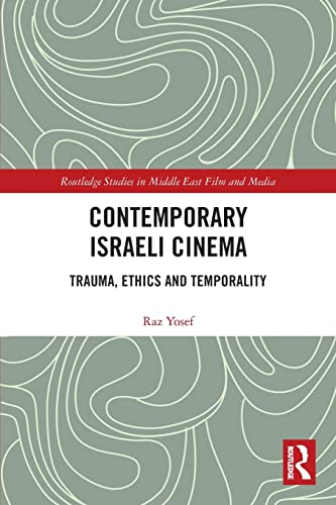

Contemporary Israeli Cinema
Couldn't load pickup availability
Collapsible content
DESCRIPTION
Trauma, Ethics and Temporality. Through analysis of the complex discourse surrounding trauma and loss, this book provides a necessary examination of temporality and ethics in Israeli film and television since the turn of the millennium. Through analysis of the complex discourse surrounding trauma and loss, this book provides a necessary examination of temporality and ethics in Israeli film and television since the turn of the millennium. The author examines posttraumatic idioms of fragmentation and incoherence, highlighting the rising resistance towards generic categories, and the turn to unconventional and paradoxical structures with unique aesthetics. Maintaining that contemporary Israeli cinema has undergone an ethical shift, the author examines the revealing traumas and denied identities that also seek alternative ways to confront ethical question of accountability. It discusses the relationships between trauma, nationalism, and cinema through the intertwined perspectives of feminism, queer theory, and critical race and postcolonial studies, showing how national traumas are constructed by notions of gendered, sexual, and racial identity. This innovative text highlights the complexities of discourse surrounding trauma and loss, informed by multiple categories of difference. Across each chapter various elements of Israeli film are explored, spanning from strategies used to critically examine victim-perpetrator dynamics, co-existence in temporal space, women’s cinema in Israel, displacement, and queer communities and identity. Beyond its direct contribution to cinema studies and Israel studies, the book will be of interest to trauma and memory studies, postcolonial studies, gender and sexuality studies, Jewish studies, Middle Eastern studies, and cultural studies.
DELIVERY & RETURNS
UK Delivery:
- Free delivery on all orders of £10 or more.
- £1.49 delivery fee on orders below £10.
- UK orders are shipped via Royal Mail 2nd Class.
International Delivery:
- Flat rate delivery charges vary by country.
Dispatch and Delivery Times:
- All orders are shipped from our warehouse in Northampton, UK within 48 hours of receipt during working hours.
- UK mainland orders typically arrive within 3-5 working days via Royal Mail 2nd Class.
- International estimated delivery times:
- Europe & Channel Islands: 7 to 10 working days
- USA: 7 to 15 working days
- Rest of the World: 9 to 21 working days
View our full delivery infomation here.
-
OVER
2 MILLION PRODUCTS
-
60 MILLION CUSTOMERS
ACROSS 190 COUNTRIES
You might also like
Loading recommendations...