

Negotiating Cultural Diversity in Afghanistan
Negotiating Cultural Diversity in Afghanistan
Paperback
Couldn't load pickup availability
Join our rewards scheme and earn reward points on this purchase!
Earn points on this!
Sign in or Sign up!- Release Date: 30/09/2021
- Barcode: 9781032175850
- Genre: Society & Culture
- Subgenre: Science Nature & Math
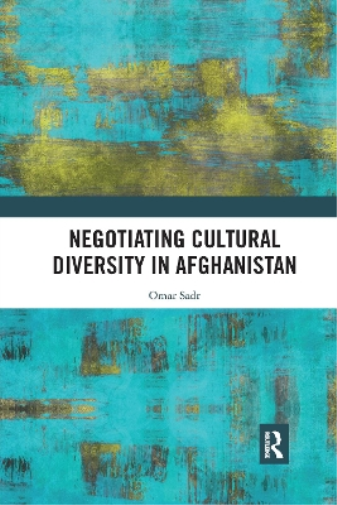

Negotiating Cultural Diversity in Afghanistan
Couldn't load pickup availability
Collapsible content
DESCRIPTION
This book analyses multiculturalism and state-building in contemporary Afghanistan. It explores how modern state construction in twentieth-century Afghanistan led to forced assimilation, expulsion and multiple forms of discriminations and how Afghan nationalism was manufactured as an ideology to reinforce the process of Afghanisation. This book analyses the problematique of governance and administration of cultural diversity within the modern state of Afghanistan and traces patterns of national integration. It explores state construction in twentieth-century Afghanistan and Afghan nationalism, and explains the shifts in the state’s policies and societal responses to different forms of governance of cultural diversity. The book problematizes liberalism, communitarianism, and multiculturalism as approaches to governance of diversity within the nation-state. It suggests that while the western models of multiculturalism have recognized the need to accommodate different cultures, they failed to engage with them through intercultural dialogue. It also elaborates the challenge of intra-group diversity and the problem of accommodating individual choice and freedom while recognising group rights and adoption of multiculturalism. The book develops an alternative approach through synthesising critical multiculturalism and interculturalism as a framework on a democratic and inclusive approach to governance of diversity. A major intervention in understanding a war-torn country through an insider account, this book will be of great interest to scholars and researchers of politics and international relations, especially those concerned with multiculturalism, state-building, nationalism, and liberalism, as well as those in cultural studies, history, Afghanistan studies, South Asian studies, Middle East studies, minority studies, and to policymakers.
DELIVERY & RETURNS
UK Delivery:
- Free delivery on all orders of £10 or more.
- £1.49 delivery fee on orders below £10.
- UK orders are shipped via Royal Mail 2nd Class.
International Delivery:
- Flat rate delivery charges vary by country.
Dispatch and Delivery Times:
- All orders are shipped from our warehouse in Northampton, UK as soon as stock is available.
- UK mainland orders typically arrive within 3-7 working days via Royal Mail 2nd Class.
- International estimated delivery times:
- Europe & Channel Islands: 7 to 10 working days
- USA: 7 to 15 working days
- Rest of the World: 9 to 30 working days
View our full delivery infomation here.
-
OVER
2 MILLION PRODUCTS
-
60 MILLION CUSTOMERS
ACROSS 190 COUNTRIES
You might also like
Loading recommendations...