

Power and Rhetoric in the Ecclesiastical Correspondence of Constantine the Great
Power and Rhetoric in the Ecclesiastical Correspondence of Constantine the Great
Hardback
Couldn't load pickup availability
Join our rewards scheme and earn reward points on this purchase!
Earn points on this!
Sign in or Sign up!- Release Date: 30/11/2022
- Barcode: 9781032105154
- Genre: History
- Subgenre: Ancient History

Power and Rhetoric in the Ecclesiastical Correspondence of Constantine the Great
Couldn't load pickup availability
Collapsible content
DESCRIPTION
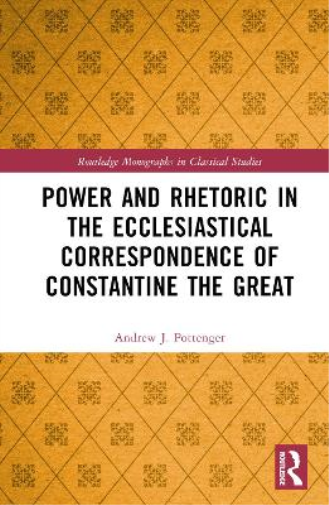
This volume examines patterns of rhetoric in Constantine the Great's surviving correspondence on conflicts among Christians, exploring how and why Constantine applied his power to internal church divisions. Suitable for students and scholars of early Christianity and the history of the later Roman Empire. This volume closely examines patterns of rhetoric in surviving correspondence by the Roman emperor Constantine on conflicts among Christians that occurred during his reign, primarily the ‘Donatist schism’ and ‘Arian controversy’. Commonly remembered as the ‘first Christian emperor’ of the Roman Empire, Constantine’s rule sealed a momentous alliance between church and state for more than a millennium. His well-known involvement with Christianity led him to engage with two major disputes that divided his Christian subjects: the ‘Donatist schism’ centred, from the emperor's perspective, on determining the rightful bishop of Carthage, and the so-called ‘Arian controversy’, a theological conflict about the proper understanding of the Son's divine nature in relation to that of the Father. This book examines a number of letters associated with Constantine that directly address both of these disagreements, exploring his point of view and motivations to better understand how and why this emperor applied his power to internal church divisions. Based on a close analysis of prominent themes and their functions in the rhetoric of his correspondence, Pottenger argues that three ‘doctrines of power’ served to inform and direct Constantine’s use of power as he engaged with these problems of schism and heresy. Power and Rhetoric in the Ecclesiastical Correspondence of Constantine the Great is of interest to students and scholars of early Christianity and the history of the later Roman Empire.
DELIVERY & RETURNS
UK Delivery:
- Free delivery on all orders of £10 or more.
- £1.49 delivery fee on orders below £10.
- UK orders are shipped via Royal Mail 2nd Class.
International Delivery:
- Flat rate delivery charges vary by country.
Dispatch and Delivery Times:
- All orders are shipped from our warehouse in Northampton, UK as soon as stock is available.
- UK mainland orders typically arrive within 3-7 working days via Royal Mail 2nd Class.
- International estimated delivery times:
- Europe & Channel Islands: 7 to 10 working days
- USA: 7 to 15 working days
- Rest of the World: 9 to 30 working days
View our full delivery infomation here.
-
OVER
2 MILLION PRODUCTS
-
60 MILLION CUSTOMERS
ACROSS 190 COUNTRIES
You might also like
Loading recommendations...