

Behavioural Economics and Regulation
Behavioural Economics and Regulation
The Design Process of Regulatory Nudges
Paperback
Couldn't load pickup availability
Join our rewards scheme and earn reward points on this purchase!
Earn points on this!
Sign in or Sign up!- Release Date: 05/08/2024
- Barcode: 9781032077222
- Imprint: Routledge
- Publisher: Taylor & Francis
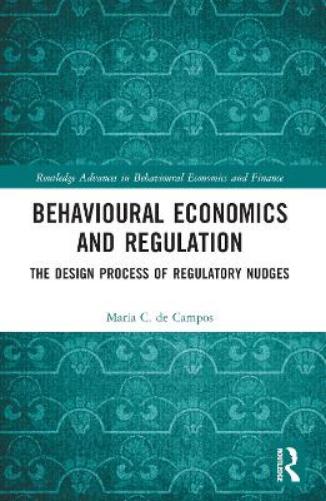

Behavioural Economics and Regulation
Couldn't load pickup availability
Collapsible content
DESCRIPTION
The Design Process of Regulatory Nudges How nudges can be incorporated into regulatory practice, and whether the experimental methodologies used to design nudges are still appropriate when they are being used as a regulatory instrument is still an unexplored issue. As this book shows, the translation of ideas into the world of regulation is not so simple and straightforward. In recent years, the idea of "nudges" – small changes in individual choice architecture that do not involve incentives or coercion – has entered policy discourse and practice to address various problems ranging from energy usage to retirement savings. However, how nudges can be incorporated into regulatory practice, and whether the experimental methodologies used to design nudges are still appropriate when they are being used as a regulatory instrument is still an unexplored issue. As this book shows, the translation of ideas into the world of regulation is not so simple and straightforward. By analysing the different experimental alternatives that regulators can use when designing nudges and through a close analysis of a real-world example – the case of the European Union tobacco warnings – this book proposes an alternative design process more in tune with the reality of regulation. The book explores the implications of iterative experimental methodologies and processes for regulators, concluding with a call for an alternative nudging’s design process tailored to the regulatory space. This book is crucial for researchers and policy-makers interested in the incorporation of nudging into regulation and anyone interested in the implications of behavioural economics – and evidence more generally – for regulatory design.
DELIVERY & RETURNS
UK Delivery:
- Free delivery on all orders of £10 or more.
- £1.49 delivery fee on orders below £10.
- UK orders are shipped via Royal Mail 2nd Class.
International Delivery:
- Flat rate delivery charges vary by country.
Dispatch and Delivery Times:
- All orders are shipped from our warehouse in Northampton, UK within 48 hours of receipt during working hours.
- UK mainland orders typically arrive within 3-5 working days via Royal Mail 2nd Class.
- International estimated delivery times:
- Europe & Channel Islands: 7 to 10 working days
- USA: 7 to 15 working days
- Rest of the World: 9 to 21 working days
View our full delivery infomation here.
-
OVER
2 MILLION PRODUCTS
-
60 MILLION CUSTOMERS
ACROSS 190 COUNTRIES
You might also like
Loading recommendations...