


Reframing the Buffer State in Contemporary International Relations
Reframing the Buffer State in Contemporary International Relations
Hardback
Couldn't load pickup availability
Join our rewards scheme and earn reward points on this purchase!
Earn points on this!
Sign in or Sign up!- Release Date: 17/05/2023
- Barcode: 9781032014173
- Genre: Law & Politics

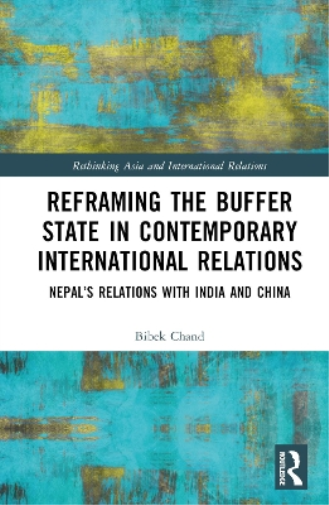

Reframing the Buffer State in Contemporary International Relations
Couldn't load pickup availability
Collapsible content
DESCRIPTION
Nepal’s Relations with India and China. This book explores buffer states' agency beyond being highly interactive spaces for the competing strategic and security interests of larger powers. Analysing twenty-one political events the author offers a new conceptual framework for the buffer state, which emphasizes strategic utility and agency of the buffer state. This book explores buffer states' agency beyond being highly interactive spaces for the competing strategic and security interests of larger powers. Analyzing 21 political events, the author offers a new conceptual framework for the buffer state, which emphasizes strategic utility and agency. Applying this to the case study of Nepal as a buffer state between India and China, he offers a systematic analysis of Sino-Indian interests in the wider region, and Nepal’s interactions with and reactions to them, and argues that the buffer state in contemporary international relations is characterized by intense competitive overtures from its contending neighboring states. However, the buffer state is not just a spectator but an active participant that consistently assesses and reassesses its geopolitical position in between much larger competing powers. This reading offers a new understanding of the buffer state as a highly dynamic political space wherein the levels of influence and strategies of bigger powers can be examined. Aimed at a multidisciplinary audience, this book will be of particular interest to scholars, practitioners and students of international relations, security studies, strategic studies, and Asian Studies.
DELIVERY & RETURNS
UK Delivery:
- Free delivery on all orders of £10 or more.
- £1.49 delivery fee on orders below £10.
- UK orders are shipped via Royal Mail 2nd Class.
International Delivery:
- Flat rate delivery charges vary by country.
Dispatch and Delivery Times:
- All orders are shipped from our warehouse in Northampton, UK within 48 hours of receipt during working hours.
- UK mainland orders typically arrive within 3-5 working days via Royal Mail 2nd Class.
- International estimated delivery times:
- Europe & Channel Islands: 7 to 10 working days
- USA: 7 to 15 working days
- Rest of the World: 9 to 21 working days
View our full delivery infomation here.
-
OVER
2 MILLION PRODUCTS
-
60 MILLION CUSTOMERS
ACROSS 190 COUNTRIES
You might also like
Loading recommendations...