

Champions of the Poor
Champions of the Poor
Paperback
Couldn't load pickup availability
Join our rewards scheme and earn reward points on this purchase!
Earn points on this!
Sign in or Sign up!- Release Date: 01/03/1998
- Barcode: 9780878406654
- Genre: Philosophy & Spirituality
- Subgenre: Business & Finance
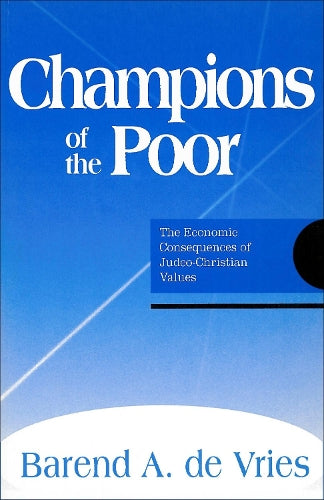

Champions of the Poor
Couldn't load pickup availability
Collapsible content
DESCRIPTION
The Economic Consequences of Judeo-Christian Values
Examines the economic roots of poverty, the actions that can be taken to eradicate it, and the ethical case for integrating the poor into the mainstream of society. This title considers both the economic feasibility of religious views regarding the eradication of poverty and the ethical aspects of economic programs.
Barend A. de Vries, a distinguished international economist, examines the economic roots of poverty, the actions that can be taken to eradicate it, and the ethical case for integrating the poor into the mainstream of society. De Vries applies Judeo-Christian ethics - in particular, the values of social justice and compassion for the poor - to the problem of poverty in both the United States and in developing countries. Bringing together the insights of economics and ethicists, he considers both the economic feasibility of religious views regarding the eradication of poverty and the ethical aspects of economic programs. He analyzes the poverty of women resulting from discrimination, the impact of environmental degradation on the poor, the allocation of funding to military rather than social programs, and the implications of the enormous debts incurred by poor countries. In addressing these conditions, he demonstrates the pressing need for action on both economic and ethical grounds.Champions of the Poor offers an unbiased presentation of the ethical positions taken by Jews, Catholics, mainline Protestants, and Evangelicals and stresses the need for all social sectors - religious and secular, business, labor and government - to work together to eradicate poverty. By reassessing poverty from these seemingly disparate approaches, it seeks to bring us closer to solving this age-old problem.
DELIVERY & RETURNS
UK Delivery:
- Free delivery on all orders of £10 or more.
- £1.49 delivery fee on orders below £10.
- UK orders are shipped via Royal Mail 2nd Class.
International Delivery:
- Flat rate delivery charges vary by country.
Dispatch and Delivery Times:
- All orders are shipped from our warehouse in Northampton, UK within 48 hours of receipt during working hours.
- UK mainland orders typically arrive within 3-5 working days via Royal Mail 2nd Class.
- International estimated delivery times:
- Europe & Channel Islands: 7 to 10 working days
- USA: 7 to 15 working days
- Rest of the World: 9 to 21 working days
View our full delivery infomation here.
-
OVER
2 MILLION PRODUCTS
-
60 MILLION CUSTOMERS
ACROSS 190 COUNTRIES
You might also like
Loading recommendations...