

Love's Masks
Love's Masks
Hardback
Couldn't load pickup availability
Join our rewards scheme and earn reward points on this purchase!
Earn points on this!
Sign in or Sign up!- Release Date: 04/05/1989
- Barcode: 9780859912648
- Genre: Literary Criticism
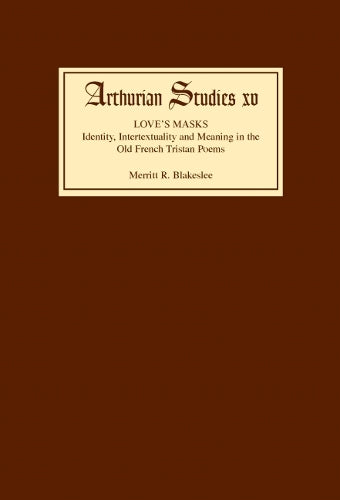

Love's Masks
Couldn't load pickup availability
Collapsible content
DESCRIPTION
Identity, Intertextuality and Meaning in the Old French Tristan Poems
French Tristan poets of the 12th century worked within a self-contained tradition. In the process of retelling the Tristan matter they elaborated a network of connections among the narrative elements of the French Tristan poems. This book traces the poets' conscious thought processes and unconscious associations as they reworked their material.
`Love's Masks raises provocative questions about the Old French Tristan poems and their context and provides some suggestive answers.' Donald Hoffman, QUONDAM ET FUTURUS, Vol. I, No 1 Spring 1991 `-a highly readable, useful overview of theTristan corpus, an excellent introduction for students and a suggestive analysis for specialists.' SPECULUM French Tristan poets of the 12th century worked within a self-contained tradition, though they drew on avariety of sources. In the process of retelling and embellishing the Tristan matter they elaborated a significant network of connections among the narrative elements of the French Tristan poems. There have been many studies of therelation of a given text to the traditional body of narrative material, but Dr Blakeslee seeks to do something rather different: he traces the poets' conscious thought processes and unconscious associations as they reworked theirmaterial. This is achieved through an examination of a single narrative element - the identities of Tristan -in the first generation of French Tristan texts, those versions of the Tristan legend composed in octosyllabic Anglo-Norman or French verse in the latter half of the 12th century and the first quarter of the 13th. Dr Blakeslee studies Tristan's parentage and antecedents, the circumstances of his birth and naming, his education and skills,his physical appearance. He then considers his social identities - knight, musician and hunter -and analyses the narrative function and metaphoric significance of the disguises that he adopts: leper, fool, minstrel, `Nightingale',pilgrim, and wild man; finally he discusses the hero as victim and saviour, identities that bring together in a single unifying metaphor the varied and contradictory elements of Tristan's persona. The meaning of these identitiesis seen to arise from the metaphorical development of narrative detail in an earlier version of the legend or in the broader literary and cultural ethos in which the poem was composed.
DELIVERY & RETURNS
UK Delivery:
- Free delivery on all orders of £10 or more.
- £1.49 delivery fee on orders below £10.
- UK orders are shipped via Royal Mail 2nd Class.
International Delivery:
- Flat rate delivery charges vary by country.
Dispatch and Delivery Times:
- All orders are shipped from our warehouse in Northampton, UK within 48 hours of receipt during working hours.
- UK mainland orders typically arrive within 3-5 working days via Royal Mail 2nd Class.
- International estimated delivery times:
- Europe & Channel Islands: 7 to 10 working days
- USA: 7 to 15 working days
- Rest of the World: 9 to 21 working days
View our full delivery infomation here.
-
OVER
2 MILLION PRODUCTS
-
60 MILLION CUSTOMERS
ACROSS 190 COUNTRIES
You might also like
Loading recommendations...