

Science on Women and Science
Science on Women and Science
Paperback
Couldn't load pickup availability
Join our rewards scheme and earn reward points on this purchase!
Earn points on this!
Sign in or Sign up!- Release Date: 01/08/2009
- Barcode: 9780844742816
- Genre: Technology & Engineering
- Subgenre: Gender Sex & Relationships
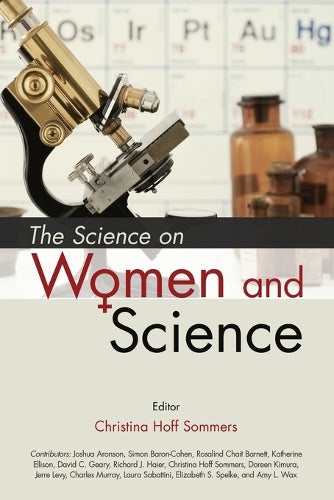

Science on Women and Science
Couldn't load pickup availability
Collapsible content
DESCRIPTION
Are women victims of a widespread bias in science and engineering, as a 2007 report of the National Academy of Sciences concluded? Or are there other, more plausible explanations for the paucity of women in various quantitative fields? This book presents a collection of essays on both sides of the issue.
Women have achieved or exceeded parity with men in most academic fields but continue to be outnumbered in the physical sciences, engineering, and math. For many equity activists, this imbalance constitutes a serious problem, even a "crisis," necessitating federal oversight to prevent gender bias in higher education and scientific industries. Congress, the Obama administration, and many science and education leaders are considering dramatic measures to improve women's prospects in the sciences. But what if claims of gender bias have been exaggerated? In 2007, the National Academy of Sciences (NAS) released Beyond Bias and Barriers: Fulfilling the Promise of Women in Academic Science and Engineering, an influential study suggesting that women face a hostile environment in the laboratory. The NAS report dismissed the possibility that gender disparities in scientific fields might be attributable to biological differences and called for immediate remedial action in education, government, and business. This volume examines the research behind the NAS's claims and presents a more balanced analysis of the gender gap.Scientific research on the relationship between gender and vocation is complex, vibrant, and full of reasonable disagreements. Some scholars agree that discrimination is the best explanation for the current configuration of men and women in science, but others, perhaps a majority, suggest that biology and considered preference explain why men and women follow different career paths. The Science on Women and Science is a lively, readable, and balanced collection of articles by distinguished scholars from sides of an often-contentious debate.
DELIVERY & RETURNS
UK Delivery:
- Free delivery on all orders of £10 or more.
- £1.49 delivery fee on orders below £10.
- UK orders are shipped via Royal Mail 2nd Class.
International Delivery:
- Flat rate delivery charges vary by country.
Dispatch and Delivery Times:
- All orders are shipped from our warehouse in Northampton, UK within 48 hours of receipt during working hours.
- UK mainland orders typically arrive within 3-5 working days via Royal Mail 2nd Class.
- International estimated delivery times:
- Europe & Channel Islands: 7 to 10 working days
- USA: 7 to 15 working days
- Rest of the World: 9 to 21 working days
View our full delivery infomation here.
-
OVER
2 MILLION PRODUCTS
-
60 MILLION CUSTOMERS
ACROSS 190 COUNTRIES
You might also like
Loading recommendations...