

Transforming Saints
Transforming Saints
Book
Couldn't load pickup availability
Join our rewards scheme and earn reward points on this purchase!
Earn points on this!
Sign in or Sign up!- Release Date: 30/07/2022
- Barcode: 9780826504715
- Genre: History
- Subgenre: Arts & Photography
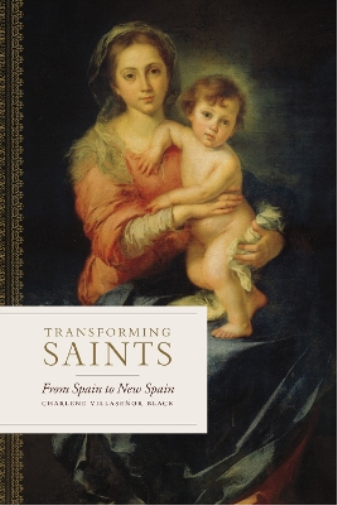

Transforming Saints
Couldn't load pickup availability
Collapsible content
DESCRIPTION
From Spain to New Spain. Explores the transformation and function of the images of holy females within wider religious, social, and political contexts of Old Spain and New Spain from the Spanish conquest to Mexican independence. Transforming Saints explores the transformation and function of the images of holy females within wider religious, social, and political contexts of Old Spain and New Spain from the Spanish conquest to Mexican independence.
The chapters here examine the rise of the cults of the lactating Madonna, St. Anne, St. Librada, St. Mary Magdalene, and the Suffering Virgin. Concerned with holy figures presented as feminine archetypes, images that came under Inquisition scrutiny, as well as cults suspected of concealing indigenous influences, Charlene VillaseÑor Black argues that these images would come to reflect the empowerment and agency of women in viceregal Mexico. Her close analysis of the imagery additionally demonstrates artists' innovative responses to Inquisition censorship and the new artistic demands occasioned by conversion.
The concerns that motivated the twenty-first century protests against Chicana artists Yolanda LÓpez in 2001 and Alma LÓpez in 2003 have a long history in the Hispanic world—anxieties about the humanization of sacred female bodies and fears of indigenous influences infiltrating Catholicism. In this context Black also examines a number of important artists in depth, including El Greco, Murillo, Jusepe de Ribera, and Pedro de Mena in Spain and Naples and Baltasar de Echave IbÍa, Juan Correa, CristÓbal de Villalpando, and Miguel Cabrera.
ADDITIONAL DETAILS
DELIVERY & RETURNS
UK Delivery:
- Free delivery on all orders of £10 or more.
- £1.49 delivery fee on orders below £10.
- UK orders are shipped via Royal Mail 2nd Class.
International Delivery:
- Flat rate delivery charges vary by country.
Dispatch and Delivery Times:
- All orders are shipped from our warehouse in Northampton, UK within 48 hours of receipt during working hours.
- UK mainland orders typically arrive within 3-5 working days via Royal Mail 2nd Class.
- International estimated delivery times:
- Europe & Channel Islands: 7 to 10 working days
- USA: 7 to 15 working days
- Rest of the World: 9 to 21 working days
View our full delivery infomation here.
-
OVER
2 MILLION PRODUCTS
-
60 MILLION CUSTOMERS
ACROSS 190 COUNTRIES
You might also like
Loading recommendations...