

Accelerated Education in Nursing
Accelerated Education in Nursing
Paperback
Couldn't load pickup availability
Join our rewards scheme and earn reward points on this purchase!
Earn points on this!
Sign in or Sign up!- Release Date: 20/12/2011
- Barcode: 9780826107633
- Edition: 1st
- Genre: Medicine
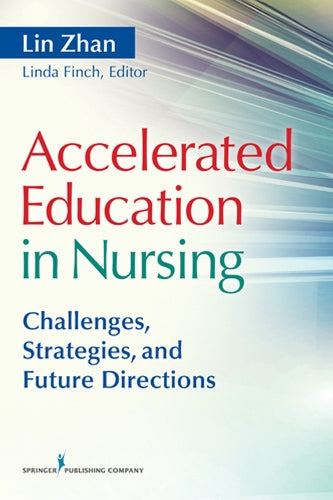

Accelerated Education in Nursing
1st
Couldn't load pickup availability
Collapsible content
DESCRIPTION
Challenges, Strategies, and Future Directions
Examining core issues in accelerated nursing education, such as curriculum innovation, clinical immersion, recruitment and retention of students and faculty, and inter-professional education, this book addresses questions such as how accelerated nursing programs prepare graduates to meet changing health care needs and which curriculums and clinical models are best suited to accelerated education.
As one of the first books examining the core issues of accelerated nursing education, this one offers valuable information on the challenges and successes of this educational model."--Doody's Medical Reviews Accelerated degree programs provide evidence that creativity in nursing program design can facilitate learning experiences that assure competence in the profession while also taking advantage of the knowledge, skills, and experiences the learner brings to our profession. Lessons learned from accelerated nursing programs can be applied in all our programs and enrich the education of professional nursesÖ" Geraldine Polly Bednash, PhD, RN, FAAN CEO, AACN Over the last two decades, an unprecedented pool of nursing students-many with academic degrees and prior work experience-have entered accelerated programs. This is the first volume to examine core issues in accelerated nursing education, such as curriculum innovation, clinical immersion, recruitment and retention of students and faculty, and inter-professional education. It also addresses questions regarding: How accelerated nursing programs prepare graduates to meet changing health care needs Which curriculums and clinical models are best suited to accelerated education What teaching strategies and evidence-based practices ensure high quality results Key Features: Discusses enrollment and admission at the BSN and MSN levels Explores curriculum innovation, new teaching methods, and start-up programs Analyzes student retention and progression, with remediation strategies Presents faculty recruitment, retention, and development successes Addresses issues concerning second degree and second career students
DELIVERY & RETURNS
UK Delivery:
- Free delivery on all orders of £10 or more.
- £1.49 delivery fee on orders below £10.
- UK orders are shipped via Royal Mail 2nd Class.
International Delivery:
- Flat rate delivery charges vary by country.
Dispatch and Delivery Times:
- All orders are shipped from our warehouse in Northampton, UK as soon as stock is available.
- UK mainland orders typically arrive within 3-7 working days via Royal Mail 2nd Class.
- International estimated delivery times:
- Europe & Channel Islands: 7 to 10 working days
- USA: 7 to 15 working days
- Rest of the World: 9 to 30 working days
View our full delivery infomation here.
-
OVER
2 MILLION PRODUCTS
-
60 MILLION CUSTOMERS
ACROSS 190 COUNTRIES
You might also like
Loading recommendations...