

Cartographic Traditions in East Asian Maps
Cartographic Traditions in East Asian Maps
Hardback
Couldn't load pickup availability
Join our rewards scheme and earn reward points on this purchase!
Earn points on this!
Sign in or Sign up!- Release Date: 31/08/2014
- Barcode: 9780824847654
- Genre: Science Nature & Math
- Sub-Genre: Earth Sciences
- Imprint: University of Hawaii Press
- Publisher: University of Hawai'i Press

Cartographic Traditions in East Asian Maps
Couldn't load pickup availability
Collapsible content
DESCRIPTION
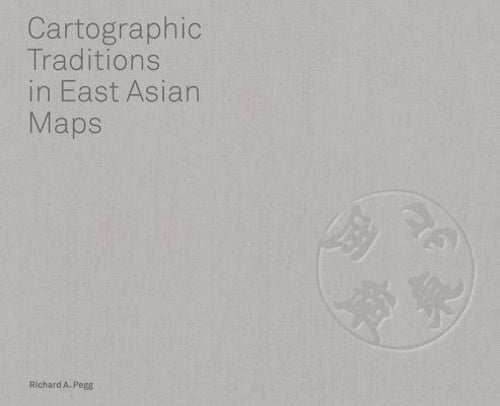
Focuses on a group of maps from the MacLean Collection, one of the world’s largest private collections of maps. The maps presented here are in a wide range of medium and formats. Each of the chapters examines one of the three principal regions of East Asia and begins with overall regional maps, then local city maps of Beijing, Edo, Yokohama and Kyoto.
Maps are the manifestation of an intellectual construct of physical and metaphysical environments. They are rich cultural objects presenting and transmitting information about time and place of production. A map is not neutral – it is an interactive, constructed representation of space as perceived and presented by its maker and then interpreted by the viewer. Maps thus reveal methodological relationships between artistic and scientific approaches, aesthetics and functionality and form and content in the context of visual culture. And given their subjective nature, maps reproduce the views or perspectives of their makers.
Cartographic Traditions in East Asian Maps is focused on a group of maps from the MacLean Collection, one of the world’s largest private collections of maps. The maps presented here are in a wide range of medium and formats including screens, wall maps, sheet maps, pocket maps, case maps and map plates. They are eighteenth and nineteenth-century maps from the late Qing dynasty in China, the Joseon dynasty in Korea and the Edo and Meiji periods in Japan illustrating late traditions in the region’s history. Each of the three chapters examines one of the three principal regions of East Asia and begins with overall regional maps, then local city maps of Beijing, Edo, Yokohama and Kyoto, respectively, or the eight provinces of Korea.
This book provides some of the particular practices and relationships between text and image in East Asian map making that are unique in world cartography. Often particular map making characteristics are not recognized as unique within their own cultural contexts, and so it is only through the process of comparing and contrasting that these qualities emerge. This survey of selected maps proves extremely useful in revealing certain similarities and distinctive differences in the representations of space, both real and imagined, in early modern cartographic traditions of China, Korea and Japan. In addition, as this was a period that Western nations were applying pressure on Asia to open for trade, religion and diplomacy, the introduction of Western cartographic methodologies during the early modern period of East Asia, along with some of the resulting changes, is also discussed.
Published in association with MacLean Collection.
ADDITIONAL DETAILS
DELIVERY & RETURNS
UK Delivery:
- Free delivery on all orders of £10 or more.
- £1.49 delivery fee on orders below £10.
- UK orders are shipped via Royal Mail 2nd Class.
International Delivery:
- Flat rate delivery charges vary by country.
Dispatch and Delivery Times:
- All orders are shipped from our warehouse in Northampton, UK within 48 hours of receipt during working hours.
- UK mainland orders typically arrive within 3-5 working days via Royal Mail 2nd Class.
- International estimated delivery times:
- Europe & Channel Islands: 7 to 10 working days
- USA: 7 to 15 working days
- Rest of the World: 9 to 21 working days
View our full delivery infomation here.
-
OVER
2 MILLION PRODUCTS
-
60 MILLION CUSTOMERS
ACROSS 190 COUNTRIES
You might also like
Loading recommendations...