


The Black Reproductive
The Black Reproductive
Book
Couldn't load pickup availability
Join our rewards scheme and earn reward points on this purchase!
Earn points on this!
Sign in or Sign up!- Release Date: 08/06/2021
- Barcode: 9780816695690
- Genre: Literary Criticism
- Subgenre: Society & Culture


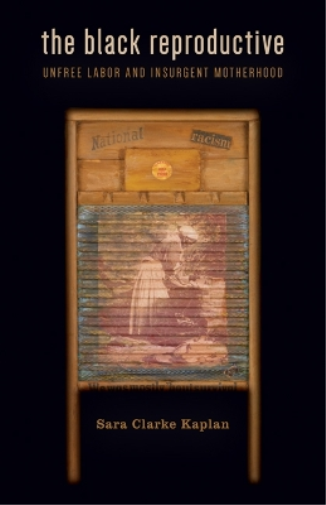

The Black Reproductive
Couldn't load pickup availability
Collapsible content
DESCRIPTION
Unfree Labor and Insurgent Motherhood. How Black women’s reproduction became integral to white supremacy, capitalism, and heteropatriarchy—and remains key to their dismantling The Black Reproductive convenes Black literary and cultural studies with feminist and queer theory to read twentieth- and twenty-first-century texts and images alongside their pre-emancipation counterparts. These provocative, unexpected couplings include how Toni Morrison’s depiction of infanticide regenders Orlando Patterson’s theory of social death, and how Mary Prince’s eighteenth-century fugitive slave narrative is resignified through the representational paradoxes of Gayl Jones’s blues novel Corregidora. Throughout, Kaplan offers new perspectives on Black motherhood and gendered labor, from debates over the relationship between President Thomas Jefferson and Sally Hemings, to the demise of racist icon Aunt Jemima, to discussions of Black reproductive freedom and abortion. The Black Reproductive gives vital insight into the historic and ongoing conditions of Black unfreedom, and points to the possibilities for a Black feminist practice of individual and collective freedom.
In the United States, slavery relied on the reproduction and other labors of unfree Black women. Nearly four centuries later, Black reproductivity remains a vital technology for the creation, negotiation, and transformation of sexualized and gendered racial categories. Yet even as Black reproduction has been deployed to resolve the conflicting demands of white supremacy, capitalism, and heteropatriarchy, Sara Clarke Kaplan argues that it also holds the potential to destabilize the oppressive systems it is supposed to maintain.
ADDITIONAL DETAILS
DELIVERY & RETURNS
UK Delivery:
- Free delivery on all orders of £10 or more.
- £1.49 delivery fee on orders below £10.
- UK orders are shipped via Royal Mail 2nd Class.
International Delivery:
- Flat rate delivery charges vary by country.
Dispatch and Delivery Times:
- All orders are shipped from our warehouse in Northampton, UK within 48 hours of receipt during working hours.
- UK mainland orders typically arrive within 3-5 working days via Royal Mail 2nd Class.
- International estimated delivery times:
- Europe & Channel Islands: 7 to 10 working days
- USA: 7 to 15 working days
- Rest of the World: 9 to 21 working days
View our full delivery infomation here.
-
OVER
2 MILLION PRODUCTS
-
60 MILLION CUSTOMERS
ACROSS 190 COUNTRIES
You might also like
Loading recommendations...