

Empire of Commerce
Empire of Commerce
The Closing of the Mississippi and the Opening of Atlantic Trade
Paperback
Couldn't load pickup availability
Join our rewards scheme and earn reward points on this purchase!
Earn points on this!
Sign in or Sign up!- Release Date: 28/05/2024
- Barcode: 9780813951249
- Imprint: University of Virginia Press
- Publisher: University of Virginia Press
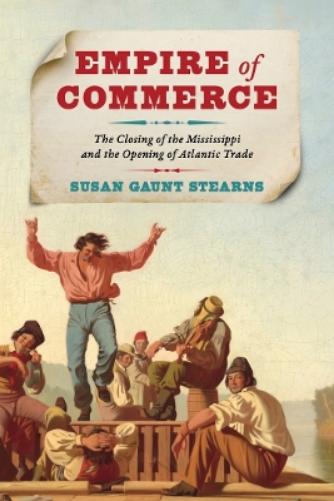

Empire of Commerce
Couldn't load pickup availability
Collapsible content
DESCRIPTION
The Closing of the Mississippi and the Opening of Atlantic Trade
Takes readers back to a time when there was nothing inevitable about the United States’ untrammeled westward expansion. Susan Gaunt Stearns’ work demonstrates the centrality of trade on and along the Mississippi River to the complex development of the political and economic structures that shaped the nascent American republic.
A groundbreaking study situating the Mississippi River valley at the heart of the early American republic’s political economy
Shortly after the ratification of the US Constitution in 1789, twenty-two-year-old Andrew Jackson pledged his allegiance to the king of Spain. Prior to the Louisiana Purchase, imperial control of the North American continent remained an open question. Spain controlled the Mississippi River, closing it to American trade in 1784, and western men on the make like Jackson had to navigate the overlapping economic and political forces at work with ruthless pragmatism.
In Empire of Commerce, Susan Gaunt Stearns takes readers back to a time when there was nothing inevitable about the United States’ untrammeled westward expansion. Her work demonstrates the centrality of trade on and along the Mississippi River to the complex development of the political and economic structures that shaped the nascent American republic. Stearns’s perspective-shifting book reconfigures our understanding of key postrevolutionary moments—the writing of the Constitution, the outbreak of the Whiskey Rebellion, and the Louisiana Purchase—and demonstrates how the transatlantic cotton trade finally set the stage for transforming an imagined West into something real.
DELIVERY & RETURNS
UK Delivery:
- Free delivery on all orders of £10 or more.
- £1.49 delivery fee on orders below £10.
- UK orders are shipped via Royal Mail 2nd Class.
International Delivery:
- Flat rate delivery charges vary by country.
Dispatch and Delivery Times:
- All orders are shipped from our warehouse in Northampton, UK within 48 hours of receipt during working hours.
- UK mainland orders typically arrive within 3-5 working days via Royal Mail 2nd Class.
- International estimated delivery times:
- Europe & Channel Islands: 7 to 10 working days
- USA: 7 to 15 working days
- Rest of the World: 9 to 21 working days
View our full delivery infomation here.
-
OVER
2 MILLION PRODUCTS
-
60 MILLION CUSTOMERS
ACROSS 190 COUNTRIES
You might also like
Loading recommendations...