

Kabbalistic Revolution
Kabbalistic Revolution
Reimagining Judaism in Medieval Spain
Hardback
Couldn't load pickup availability
Join our rewards scheme and earn reward points on this purchase!
Earn points on this!
Sign in or Sign up!- Release Date: 01/11/2014
- Barcode: 9780813568751
- Genre: Philosophy & Spirituality
- Sub-Genre: Theology
- Imprint: Rutgers University Press
- Publisher: Rutgers University Press
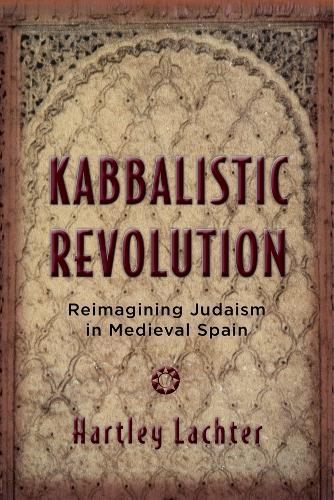

Kabbalistic Revolution
Couldn't load pickup availability
Collapsible content
DESCRIPTION
Reimagining Judaism in Medieval Spain
The set of Jewish mystical teachings known as Kabbalah are often imagined as timeless texts, teachings that have been passed down through the millennia. Yet, as this groundbreaking new study shows, Kabbalah flourished in a specific time and place, emerging in response to the social prejudices that Jews faced.
The set of Jewish mystical teachings known as Kabbalah are often imagined as timeless texts, teachings that have been passed down through the millennia. Yet, as this groundbreaking new study shows, Kabbalah flourished in a specific time and place, emerging in response to the social prejudices that Jews faced.
Hartley Lachter, a scholar of religion studies, transports us to medieval Spain, a place where anti-Semitic propaganda was on the rise and Jewish political power was on the wane. Kabbalistic Revolution proposes that, given this context, Kabbalah must be understood as a radically empowering political discourse. While the era’s Christian preachers claimed that Jews were blind to the true meaning of scripture and had been abandoned by God, the Kabbalists countered with a doctrine that granted Jews a uniquely privileged relationship with God. Lachter demonstrates how Kabbalah envisioned this increasingly marginalized group at the center of the universe, their mystical practices serving to maintain the harmony of the divine world.
For students of Jewish mysticism, Kabbalistic Revolution provides a new approach to the development of medieval Kabbalah. Yet the book’s central questions should appeal to anyone with an interest in the relationships between religious discourses, political struggles, and ethnic pride.
DELIVERY & RETURNS
UK Delivery:
- Free delivery on all orders of £10 or more.
- £1.49 delivery fee on orders below £10.
- UK orders are shipped via Royal Mail 2nd Class.
International Delivery:
- Flat rate delivery charges vary by country.
Dispatch and Delivery Times:
- All orders are shipped from our warehouse in Northampton, UK as soon as stock is available.
- UK mainland orders typically arrive within 3-7 working days via Royal Mail 2nd Class.
- International estimated delivery times:
- Europe & Channel Islands: 7 to 10 working days
- USA: 7 to 15 working days
- Rest of the World: 9 to 30 working days
View our full delivery infomation here.
-
OVER
2 MILLION PRODUCTS
-
60 MILLION CUSTOMERS
ACROSS 190 COUNTRIES
You might also like
Loading recommendations...