

The Origins of Proslavery Christianity
The Origins of Proslavery Christianity
White and Black Evangelicals in Colonial and Antebellum Virginia
Paperback
Couldn't load pickup availability
Join our rewards scheme and earn reward points on this purchase!
Earn points on this!
Sign in or Sign up!- Release Date: 19/05/2008
- Barcode: 9780807858776
- Genre: Philosophy & Spirituality
- Sub-Genre: Religion
- Imprint: University of North Carolina Press
- Publisher: The University of North Carolina Press
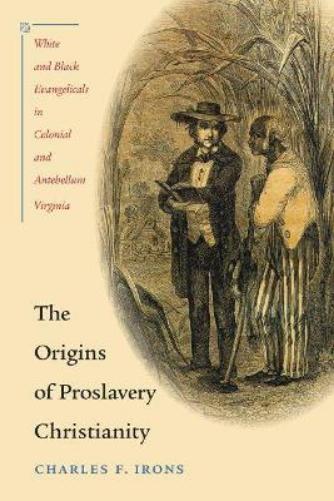

The Origins of Proslavery Christianity
Couldn't load pickup availability
Collapsible content
DESCRIPTION
White and Black Evangelicals in Colonial and Antebellum Virginia
Argues that white evangelicals' ideas about slavery grew directly out of their interactions with black evangelicals. This book draws from church records and slave narratives to illuminate the relationship between whites and blacks within the evangelical fold. It argues that black evangelicals inadvertently shaped the proslavery argument.
This book deals with the evangelical roots of the proslavery argument. In the colonial and antebellum South, black and white evangelicals frequently prayed, sang, and worshipped together. Even though white evangelicals claimed spiritual fellowship with those of African descent, they nonetheless emerged as the most effective defenders of race-based slavery. As Charles Irons persuasively argues, white evangelicals' ideas about slavery grew directly out of their interactions with black evangelicals. Set in Virginia, the largest slaveholding state and the hearth of the southern evangelical movement, this book draws from church records, denominational newspapers, slave narratives, and private letters and diaries to illuminate the dynamic relationship between whites and blacks within the evangelical fold. Irons reveals that when whites theorized about their moral responsibilities toward slaves, they thought first of their relationships with bondmen in their own churches. Thus, African American evangelicals inadvertently shaped the nature of the proslavery argument. When they chose which churches to join, exercised the procedures set up for church discipline, rejected colonization, or built quasi-independent congregations, for example, black churchgoers spurred their white coreligionists to further develop the religious defense of slavery.
DELIVERY & RETURNS
UK Delivery:
- Free delivery on all orders of £10 or more.
- £1.49 delivery fee on orders below £10.
- UK orders are shipped via Royal Mail 2nd Class.
International Delivery:
- Flat rate delivery charges vary by country.
Dispatch and Delivery Times:
- All orders are shipped from our warehouse in Northampton, UK within 48 hours of receipt during working hours.
- UK mainland orders typically arrive within 3-5 working days via Royal Mail 2nd Class.
- International estimated delivery times:
- Europe & Channel Islands: 7 to 10 working days
- USA: 7 to 15 working days
- Rest of the World: 9 to 21 working days
View our full delivery infomation here.
-
OVER
2 MILLION PRODUCTS
-
60 MILLION CUSTOMERS
ACROSS 190 COUNTRIES
You might also like
Loading recommendations...