

The Most Absolute Abolition
The Most Absolute Abolition
Runaways, Vigilance Committees, and the Rise of Revolutionary Abolitionism, 1835–1861
Hardback
Couldn't load pickup availability
Join our rewards scheme and earn reward points on this purchase!
Earn points on this!
Sign in or Sign up!- Release Date: 17/08/2022
- Barcode: 9780807177303
- Imprint: Louisiana State University Press
- Publisher: Louisiana State University Press
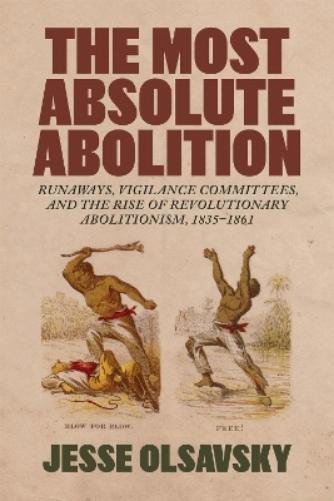

The Most Absolute Abolition
Couldn't load pickup availability
Collapsible content
DESCRIPTION
Runaways, Vigilance Committees, and the Rise of Revolutionary Abolitionism, 1835–1861
Tells the dramatic story of how vigilance committees organised the Underground Railroad and revolutionized the abolitionist movement. Jesse Olsavsky reveals how the committees cultivated a movement of ideas animated by a motley assortment of agitators and intellectuals who shared critical information with one another.
Jesse Olsavsky's The Most Absolute Abolition tells the dramatic story of how vigilance committees organized the Underground Railroad and revolutionized the abolitionist movement. These groups, based primarily in northeastern cities, defended Black neighborhoods from police and slave catchers. As the urban wing of the Underground Railroad, they helped as many as ten thousand refugees, building an elaborate network of like-minded sympathizers across boundaries of nation, gender, race, and class.
Olsavsky reveals how the committees cultivated a movement of ideas animated by a motley assortment of agitators and intellectuals, including famous figures such as Frederick Douglass, Harriet Tubman, and Henry David Thoreau, who shared critical information with one another. Formerly enslaved runaways—who grasped the economy of slavery, developed their own political imaginations, and communicated strategies of resistance to abolitionists—serve as the book's central focus. The dialogues between fugitives and abolitionists further radicalized the latter's tactics and inspired novel forms of feminism, prison reform, and utopian constructs. These notions transformed abolitionism into a revolutionary movement, one at the heart of the crises that culminated in the Civil War.
DELIVERY & RETURNS
UK Delivery:
- Free delivery on all orders of £10 or more.
- £1.49 delivery fee on orders below £10.
- UK orders are shipped via Royal Mail 2nd Class.
International Delivery:
- Flat rate delivery charges vary by country.
Dispatch and Delivery Times:
- All orders are shipped from our warehouse in Northampton, UK within 48 hours of receipt during working hours.
- UK mainland orders typically arrive within 3-5 working days via Royal Mail 2nd Class.
- International estimated delivery times:
- Europe & Channel Islands: 7 to 10 working days
- USA: 7 to 15 working days
- Rest of the World: 9 to 21 working days
View our full delivery infomation here.
-
OVER
2 MILLION PRODUCTS
-
60 MILLION CUSTOMERS
ACROSS 190 COUNTRIES
You might also like
Loading recommendations...