

Historicism and Fascism in Modern Italy
Historicism and Fascism in Modern Italy
Paperback
Couldn't load pickup availability
Join our rewards scheme and earn reward points on this purchase!
Earn points on this!
Sign in or Sign up!- Release Date: 27/10/2007
- Barcode: 9780802094940
- Genre: Society & Culture
- Sub-Genre: Politics & Government
- Imprint: University of Toronto Press
- Publisher: University of Toronto Press
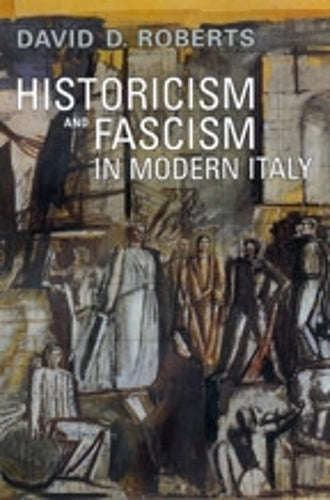

Historicism and Fascism in Modern Italy
Couldn't load pickup availability
Collapsible content
DESCRIPTION
This set of twelve essays by one of the leading scholars in the field represents an authoritative view of the modern Italian intellectual tradition, its relationship with fascism, and its enduring implications for history, politics, and culture in Italy and beyond. During the early decades of the twentieth century, Italy produced distinctive innovations in both the intellectual and political realms. On the one hand, Benedetto Croce (1866-1952) and Giovanni Gentile (1875-1944) spearheaded a radical rethinking of historicism and philosophical idealism that significantly reoriented Italian culture. On the other hand, the period witnessed the first rumblings of fascism. Assuming opposite sides, Gentile became the semi-official philosopher of fascism while Croce argued for a renewed liberalism based on 'absolute' historicism. In Historicism and Fascism in Modern Italy, David D. Roberts uses the ideological conflict between Croce and Gentile as a basis for a wider discussion of the interplay between politics and ideas in Italy during the early-twentieth century. Roberts examines the connection between fascism and the modern Italian intellectual tradition, arguing that the relationship not only deepens our understanding of fascism and liberalism but also illuminates ongoing dangers and possibilities in the wider Western world. This set of twelve essays by one of the leading scholars in the field represents an authoritative view of the modern Italian intellectual tradition, its relationship with fascism, and its enduring implications for history, politics, and culture in Italy and beyond.
ADDITIONAL DETAILS
DELIVERY & RETURNS
UK Delivery:
- Free delivery on all orders of £10 or more.
- £1.49 delivery fee on orders below £10.
- UK orders are shipped via Royal Mail 2nd Class.
International Delivery:
- Flat rate delivery charges vary by country.
Dispatch and Delivery Times:
- All orders are shipped from our warehouse in Northampton, UK within 48 hours of receipt during working hours.
- UK mainland orders typically arrive within 3-5 working days via Royal Mail 2nd Class.
- International estimated delivery times:
- Europe & Channel Islands: 7 to 10 working days
- USA: 7 to 15 working days
- Rest of the World: 9 to 21 working days
View our full delivery infomation here.
-
OVER
2 MILLION PRODUCTS
-
60 MILLION CUSTOMERS
ACROSS 190 COUNTRIES
You might also like
Loading recommendations...