

Limits of Constraint
Limits of Constraint
Book
Couldn't load pickup availability
Join our rewards scheme and earn reward points on this purchase!
Earn points on this!
Sign in or Sign up!- Release Date: 19/08/2022
- Barcode: 9780700633302
- Genre: Law & Politics
- Subgenre: History
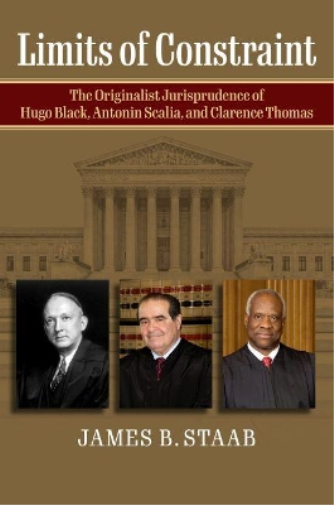

Limits of Constraint
Couldn't load pickup availability
Collapsible content
DESCRIPTION
The Originalist Jurisprudence of Hugo Black, Antonin Scalia, and Clarence Thomas. Rather than rehash theoretical debates about the merits of originalism, Limits of Constraint examines originalism in operation by focusing on the judicial opinions of three prominent Supreme Court originalists: Hugo Black, Antonin Scalia, and Clarence Thomas. Adherents of originalism often present it as a theory that constrains legal decision-making in a clear and objective manner that is based on the text and original meaning of the Constitution, in contrast to the supposedly subjective and “activist” jurisprudence of those who promote a living Constitution. But originalists have not had the same views on constitutional issues, calling into question the theory of originalism. Limits of Constraint examines the originalist jurisprudence of Hugo Black, Antonin Scalia, and Clarence Thomas, showing that three of the Court’s originalists have arrived at different conclusions in many constitutional areas. While the starkest contrast is between Justice Black and Justices Scalia and Thomas, even the latter two justices have disagreed on several key issues, including executive power and the administrative state. James Staab shows that originalism in actual practice does not deliver on its promise of an objective jurisprudence free of personal philosophy and discretion.
Rather than rehash theoretical debates about the merits of originalism, Limits of Constraint examines originalism in operation by focusing on the judicial opinions of three prominent Supreme Court originalists: Hugo Black, Antonin Scalia, and Clarence Thomas. If the analysis of this book is correct—that is, the results reached by Justices Black, Scalia, and Thomas are divergent across a wide array of constitutional areas—then originalism promises more than it can deliver. One of the fundamental claims made by originalists is that their theory of constitutional interpretation limits judicial discretion, but originalism does not constrain judicial behavior as much as its defenders claim.
ADDITIONAL DETAILS
DELIVERY & RETURNS
UK Delivery:
- Free delivery on all orders of £10 or more.
- £1.49 delivery fee on orders below £10.
- UK orders are shipped via Royal Mail 2nd Class.
International Delivery:
- Flat rate delivery charges vary by country.
Dispatch and Delivery Times:
- All orders are shipped from our warehouse in Northampton, UK within 48 hours of receipt during working hours.
- UK mainland orders typically arrive within 3-5 working days via Royal Mail 2nd Class.
- International estimated delivery times:
- Europe & Channel Islands: 7 to 10 working days
- USA: 7 to 15 working days
- Rest of the World: 9 to 21 working days
View our full delivery infomation here.
-
OVER
2 MILLION PRODUCTS
-
60 MILLION CUSTOMERS
ACROSS 190 COUNTRIES
You might also like
Loading recommendations...